There is a political faction now that whenever I see it, I remember the Muslims in the Battle of the Bridge. When you read this battle you will know this political faction
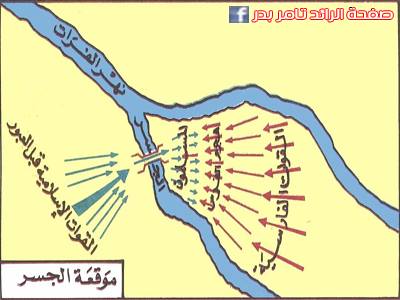
Islamic military history offers us many lessons that are necessary and possible to learn at all times. Even those battles in which Muslims lost require us to pause and examine the reasons that led to the defeat. Perhaps the most famous of these battles was the Battle of the Bridge, which took place on the twenty-third of Sha'ban in the year 13 AH. Battle preparation atmosphere As a result of the military developments on the front with the Romans, a large portion of the army was redeployed to the front facing the Romans. The Persians then focused their efforts on eliminating the Islamic presence in Iraq. Commander Muthanna ibn Haritha decided to assemble the Muslim army on the Iraqi border. He quickly went to present the matter to Caliph Abu Bakr al-Siddiq (may Allah be pleased with him), but found him dying. He soon died and was succeeded by Umar ibn al-Khattab (may Allah be pleased with him). Muthanna presented him with the military situation in Iraq. Umar ibn al-Khattab had many tasks before him after assuming the caliphate. However, he prioritized the jihad against the Persians in Iraq. He called upon the people, urging them to wage jihad against the Persians. However, the situation was not entirely clear to the Muslims during this transitional period between the rule of two caliphs, and people hesitated to respond to the call. After repeated attempts, about a thousand men responded. He gathered them and appointed Abu Ubayd al-Thaqafi as their commander, directing them to Iraq. According to the consensus of historians, Abu Ubaid Al-Thaqafi was not fully qualified for leadership, but he was known for his courage, loyalty and piety, so much so that his courage was an example among the Arabs at that time, a fact that Umar ibn Al-Khattab, may God be pleased with him, was aware of. However, during that difficult period, he had no other choice but to hand over the leadership of the army to Abu Ubaid, who, as soon as he entered Iraq, organized the ranks and, thanks to God and then to his courage and boldness, was able to regain all the lands that the Muslims had abandoned. With his army, which did not exceed ten thousand fighters, he was able to win three major battles: Al-Namariq, Al-Saqatiyah and Baqisyatha. Caliph Umar was closely and directly following the news of Abu Ubaid, and was reassured of his eligibility to lead the army after the victories he had achieved. The situation of the Persians These victories achieved by the Muslims under the leadership of Abu Ubaid had a resounding impact on the Persians. The Persian home front was severely shaken, to the point that Rostam's opponents revolted against him, accusing him of negligence and inaction in fighting the Muslims. Morale began to collapse in the ranks of the Persian army. Rostam had to take action to halt the deterioration on the home front, and to achieve any victory over the Muslim army to raise the morale of his army. He held a meeting at the highest levels of leadership and summoned the commander, Al-Jalinos, who had fled from fighting the Muslims. He was furious with him and sentenced him to death with a suspended sentence, demoting him from commander-in-chief to assistant commander-in-chief. He then consulted with the senior commanders of his armies on how to achieve victory over the Muslims, even once, in an attempt to raise the morale of the Persian soldiers who had been defeated in every encounter with the Muslims. Rostam was shrewd, so he met with Al-Jalinos, the former commander of the army, and consulted with him about the strengths and weaknesses of the Muslim army. Al-Jalinos explained to him that large numbers were of no use against the Muslim army. Because their fighting style relied on hit and run, and they excelled at fighting in flat areas that resembled their desert environment, and other points that Rustum took into account and benefited from in preparing the army. The first step taken by Rostam was to choose a strong commander for the army. He chose the most skilled and clever of the Persian commanders, Dhu al-Hajib Bahman Jadhuyeh. He was one of the most arrogant and hateful Persian commanders against the Muslims and the Arabs. He was called Dhu al-Hajib because he used to tie his thick eyebrows to raise them from his eyes out of arrogance. Rostam entrusted him with the command of the army, which numbered more than seventy thousand Persians. Rostam also chose the commanders of the soldiers and the heroes of the cavalry himself. To overcome the Muslims’ method of fighting by hit and run, he equipped the army for the first time with Persian armored weapons, namely elephants. To give special importance to this armored army, Rostam gave it the great Persian banner, called Darvin Kabyan, which was made of tiger skin. This banner was only flown by their kings in their decisive battles. Abu Ubaid was following the Persian military movements through his intelligence, and he received news of the huge army that Rustam had prepared to fight the Muslim army. He headed with his army to an area north of Al-Hirah called “Qais Al-Natif”, and encamped with his army in this area, awaiting the arrival of the Persian army. The Persians arrived and stood on the other side of the Euphrates River, with the Muslims on the western side, and the Persians on the eastern side, led by Bahman Jadhuyeh. Between the two banks was a floating bridge that the Persians had built at that time for war. The Persians were skilled at building these bridges. Bahman Jadhuyeh sent a messenger to the Muslim army saying: “Either we cross to you, or you cross to us.” Abu Ubaid disobeys Omar's advice Omar ibn al-Khattab advised Abu Ubaid before he went out to fight, saying to him: “Do not reveal your secrets, for you are in control of your affairs until your secret is revealed, and do not speak of anything until you consult the Companions of the Messenger of Allah (peace and blessings be upon him).” He specifically advised him to address Saad ibn Ubaid al-Ansari and Sulayt ibn Qays, two of the noble Companions (may Allah be pleased with them all). Abu Ubaid made the first mistake, as he began to discuss and consult with his companions in front of the Persian messenger. This was revealing a secret and revealing matters of military organization. When the message reached him, he became furious and said: “By Allah, I will not let them cross and say that we were cowards who refused to meet them.” The Companions agreed not to cross to them and said to him: “How can you cross to them and cut off your line of retreat, with the Euphrates behind you?!” The Muslims and the people of the Arabian Peninsula were skilled at desert warfare. They always made a retreat line in the desert for themselves. In the event of a defeat, the army could return to the desert without being completely destroyed. However, Abu Ubaid insisted on his opinion to cross. His companions reminded him of the words of Umar ibn al-Khattab: “Consult the companions of the Messenger of Allah, peace and blessings be upon him.” He said: “By Allah, we will not be cowards in their eyes.” All of this was happening in front of the Persian messenger, who took the opportunity to incite Abu Ubaid’s anger, saying: “They say that you are cowards and will never cross for us.” Abu Ubaid said: “Then we will cross to them.” The soldiers listened and obeyed, and the Muslim army began to cross this narrow bridge to reach the other side where the Persian army was. We notice in this situation that the Islamic army entered an area confined between a river called the Nile, which is a small river and a tributary of the Euphrates River, and the Euphrates River. Both rivers are full of water, and the Persian army is blocking the rest of the area. If the Muslims entered this area, they would have no choice but to fight the Persian army. The Persians were well aware of the importance of this location, so they cleared a narrow space for the Muslims to cross to them. The Islamic army was crowded into a very small area. Al-Muthanna ibn Haritha saw this and repeated his advice to Abu Ubaid, saying: “You are only throwing us into destruction.” Abu Ubaid insisted on his opinion. The Islamic army did indeed cross into this area. The Persians had ten elephants, including the white elephant, which was the most famous and largest of the Persian elephants in war. All the elephants followed it. If it advanced, they advanced, and if it held back, they held back. The Battle The battle began and the Persian armies advanced, led by elephants, towards the Muslim army trapped between the Euphrates River and its tributary, the Nile River. The Muslim forces gradually retreated before the elephants, but behind them were two rivers, so they were forced to stand and wait for the elephants to attack and fight. The courage and strength of the Muslims were outstanding, and they entered the fight, but the horses, as soon as they saw the elephants, were frightened and fled, which hindered the Muslims from advancing to fight. The horses returned and attacked the Muslim infantry. The Muslims’ attempts to force the horses to advance were unsuccessful due to their lack of experience in confronting elephants. At this moment, after Abu Ubaid made the mistake of revealing the secret to the Persian messenger, and made a mistake in crossing against the advice of the companions of the Messenger of God, may God bless him and grant him peace, and made a mistake in choosing this place for the battle, and after all these mistakes, he had to quickly withdraw with his army from the battlefield, as Khalid ibn al-Walid did in the Battle of al-Madhar when he knew that he would be surrounded by an army from the south. He quickly withdrew with his army until he met the army of Andarzaghar in The entrance. But Abu Ubaid was determined to fight and said, “I will fight to the end.” Although this was an act of supreme courage on his part, wars, just as they are based on courage, must be handled wisely. The Persian elephants began to ferociously attack the Muslims. Abu Ubaid ordered the Muslims to abandon their horses and fight the Persians on foot. The Muslims thus lost their cavalry and were left on foot in front of Persian forces equipped with horses and elephants. The battle intensified and the Muslims did not hesitate to fight. Abu Ubaid ibn Masoud al-Thaqafi stepped forward and said, “Show me where to kill the elephant.” He had also said, “He will be killed by its trunk.” He advanced alone towards the white elephant, and they said to him, “O Abu Ubaid, you are only throwing yourself into destruction even though you are the commander.” He replied, “By God, I will not leave him alone. Either he kills me or I kill him.” He headed towards the elephant and cut the belts on which the elephant commander was being carried. The elephant commander fell and was killed by Abu Ubaid ibn Masoud, but the elephant was still alive, as it was well trained for fighting. Abu Ubaid began to fight this mighty elephant, standing on its hind legs and raising its front legs in Abu Ubaid's face. However, Abu Ubaid did not hesitate to fight and try to kill it. When he realized the difficulty of the matter, he advised those around him: "If I die, the command of the army will be for so-and-so, then for so-and-so, then for so-and-so." He listed the names of those who would succeed him in command of the army. This was also one of Abu Ubaid's mistakes, because the commander of the army must protect himself, not out of love of life, but out of concern for his army and soldiers in such circumstances. It is not just a matter of bravery, because with the death of the commander, the morale of the army collapses and many of its balances are upset. Another mistake is that Abu Ubaid recommended that the army be commanded after him by seven men from Thaqif, including his son, his brother, and the eighth, Muthanna ibn Haritha. It would have been more appropriate for the commander to be Muthanna or Sulayt ibn Qays immediately after him, as Umar ibn al-Khattab, may God be pleased with him, recommended. Martyrdom of Abu Ubaid and the accession of Al-Muthanna Abu Ubaid continued his fight with the elephant and tried to cut its trunk, but the elephant surprised him with a blow, so he fell to the ground. The elephant attacked him and trampled him with its front feet, tearing him to pieces. It was a difficult situation for the Muslims when they saw their leader killed in this horrible way. Immediately after him, the first of the seven took command of the army and charged on horseback, killing himself and being killed. The second and third did the same, and so on. Three of Abu Ubaid ibn Masoud al-Thaqafi’s sons were killed in this battle. One of them was the commander of the army. His brother, al-Hakam ibn Masoud al-Thaqafi, was also killed. He was one of the commanders of the army after the martyrdom of Abu Ubaid. The command went to al-Muthanna ibn Haritha, and the matter, as we see, was extremely difficult, and the Persians were in a fierce attack on the Muslims. At this moment, some Muslims began to flee across the bridge to the other side of the Euphrates. This was the first time in the Persian conquests that Muslims fled from battle. This flight in this situation had legal basis and was not considered fleeing from an advance. It has been said that fleeing from double strength is permissible. So what about when the Persian army was six or seven times the size of the Muslim army?! But one of the Muslims made another grave mistake. Abdullah ibn Murthad al-Thaqafi went and cut the bridge with his sword, saying, “By God, Muslims will not flee from battle; fight until you die for what your leader died for.” The Persians resumed fighting with the Muslims, and the situation became more difficult. The man who had cut the bridge was brought to the army commander, Muthanna ibn Haritha. Muthanna struck him and asked him, “What did you do to the Muslims?” The man replied, “I did not want anyone to flee from the battle.” The Muslim replied, “This is not fleeing.” Orderly withdrawal across the bridge Al-Muthanna calmly began to lead the remaining Muslim army after the fierce and brutal Persian attacks, saying to his army, encouraging them: “O servants of Allah, either victory or paradise.” Then he called on the Muslims on the other side to repair the bridge as best they could. There were some Persians with the Muslims who had converted to Islam and were capable of repairing bridges, so they began to repair the bridge again. Al-Muthanna began to lead one of the difficult operations, a withdrawal in this narrow place in front of the violent Persian forces. He sent for the bravest of the Muslims and urged them, not forced them, saying: “The bravest of the Muslims will stand on the bridge to protect it.” Asim bin Amr Al-Tamimi, Zaid Al-Khail, Qais bin Sulayt, a companion of the Messenger of God, may God bless him and grant him peace, and our master Al-Muthanna bin Haritha at their head advanced to protect the bridge. They all stood to protect the army during the crossing, and to guard the bridge so that no one from the Persians would cut it. Al-Muthanna bin Haritha said to the army in a strange calm: “Cross at your ease and do not panic; we will stand in front of you, and by God we will not leave this place until the last of you crosses.” The Muslims began to withdraw one by one and fought until the last moment. Blood covered everything and the bodies of Muslims, some dead and others drowned, piled up in the two rivers. The last Muslim martyr on the bridge was Suwaid ibn Qays, one of the companions of the Prophet (peace and blessings be upon him). The last to cross the bridge was Al-Muthanna ibn Haritha. He fought until the last moment and retreated with the Persians in front of him. As soon as he crossed the bridge, he cut it off from the Persians, who were unable to cross to the Muslims. The Muslims turned back and reached the western bank of the Euphrates River shortly before sunset. The Persians did not fight at night, so they abandoned the Muslims. This was a chance for the Muslim army to escape by withdrawing deep into the desert. If they had remained where they were, the Persian army would have crossed in the morning and killed those who remained. After the battle At this time, two thousand Muslims had fled, and some of them continued their escape to Medina. Four thousand Muslims were martyred in this battle. Eight thousand had participated in it, four thousand of whom were killed, between martyrs in combat and drowned in the river. Of these four thousand, the majority of the people of Thaqeef, and many of those who witnessed Badr, Uhud, and the battles with the Messenger of God, may God bless him and grant him peace. The situation was difficult for the Muslims, and if it were not for the grace of God Almighty, and then the appointment of Muthanna bin Haritha, no one who escaped would have been able to escape this well-prepared trap that the Persians had prepared for the Muslims. Muthanna was of unparalleled military competence, and this is the value of correct leadership. Abu Ubaid bin Masoud was full of courage, faith, and boldness. He was the first to be mobilized and went out for jihad in the presence of many of the Companions. He had set out before them and was appointed commander of the army. He entered the wars with the utmost courage and was not afraid of blame for God’s sake. He advanced to attack the elephant, knowing that That he would be killed, so he would recommend the leadership to his successor, and he did not hesitate to fight. However, the leadership of armies is not only a matter of bravery and faith, but also of great skill and military competence, so much so that some jurists said: “If there are two leaders, one of whom has a place of faith but does not understand the value of leadership and emirate, and the other has reached the level of immorality but is a Muslim, and is able to skillfully lead wars, then there is nothing wrong with this immoral one being in charge of the army in wars, because he can save the entire Muslim army, while the other might lead the army to destruction despite his faith and bravery.” The Battle of the Bridge took place on the 23rd of Shaban 13 AH. Abu Ubaid had arrived in Iraq on the 3rd of Shaban. His first battle was at Namariq on the 8th of Shaban, then at Saqatiyah on the 12th of Shaban, then at Baqisyatha on the 17th of Shaban, and then this battle on the 23rd of Shaban. Within twenty days of Abu Ubaid’s arrival with his army, the Muslims were victorious in three battles, and were defeated in one battle that wiped out half the army. Those who remained fled, and only two thousand fighters remained with Al-Muthanna. Al-Muthanna sent the news to Medina with Abdullah bin Zaid. When he arrived, he found Umar bin Al-Khattab on the pulpit. He confided in him the matter, considering how difficult it was for the Muslims. Umar wept on the pulpit. The Muslims had to know so that they would be mobilized to go out again to help the remnants of the army in Iraq. After he wept, he said, “May God have mercy on Abu Ubaid! If he had not been killed and had withdrawn, we would have been his ally, but God has decreed and whatever He wills He does.” After that, those fleeing and escaping from the battle came to Medina, crying bitterly, saying, “How can we escape?! How can we escape?!” This was a shameful and disgraceful thing for the Muslims, as they were not used to fleeing from their enemies before. However, Omar ibn al-Khattab (may Allah be pleased with him) reassured them and said, “I am your ally, and this is not considered fleeing.” Omar continued to motivate and encourage them. With them was Muadh al-Qari, who was one of those who fled. He used to lead the Muslims in the Tarawih prayers, and whenever he recited the verses about fleeing from battle, he would cry while praying. Omar reassured him and said, “You are not one of the people of this verse.”
From the book Unforgettable Days by Major Tamer Badr

 EN
EN  AR
AR  FR
FR  ES
ES  PT
PT  DE
DE  IT
IT  PL
PL  SV
SV  NB
NB  FI
FI  NL
NL  DA
DA  CS
CS  SK
SK  ET
ET  LV
LV  LT
LT  RU
RU  BE
BE  UK
UK  HU
HU  BG
BG  RO
RO  SR
SR  HR
HR  BS
BS  SQ
SQ  EL
EL  TR
TR  HE
HE  ZH
ZH  JA
JA  KO
KO  ID
ID  MS
MS  VI
VI  TL
TL  TH
TH  MY
MY  KM
KM  HI
HI  UR
UR  BN
BN  FA
FA  PS
PS  KK
KK  UZ
UZ  HY
HY  KA
KA  TA
TA  NE
NE  SI
SI  SW
SW  AM
AM