



Salman Al-Farisi - The Truth Seeker

It was a story of The Great Companion Salman al-Farsi Salman (may Allah be pleased with him) lived with Magiism, Christianity and Judaism before the advent of Islam, and kept searching for the true religion until Allah guided him to it. He did not surrender his mind and heart to the traditions and beliefs inherited in his homeland, which if he had held on to them until he died, he would not have been one of the companions of the Prophet (peace be upon him). He would not have been converted to the religion of Islam and died in his polytheism.
Despite growing up in Persia in the midst of fire worship, Salman the Persian was searching for the true religion and went out in search of God. He was a believer in the Magian religion, and he was not convinced of this religion, but he found that his parents were devoted to it, so he embraced it with them. When his doubt about his religion and the religion of his family intensified, Salman left his country and migrated to the Levant in search of the absolute religious truth, and met monks and priests in the Levant, and after a long journey, Salman arrived as a slave in Medina, and when he heard about the Prophet (peace be upon him), he met him and became Muslim after being convinced of his message.
Salman grew up in the descendants of an aristocratic family, living in paradise in Persia, and his father loved him so much and feared him so much that he locked him up in his house, and Salman had graduated in Magianism until he became the inhabitant of the fire that burns and does not let it extinguish for an hour.
One day, his father asked him to go to his estate to take care of it because of his busy schedule and asked him not to be late so that he would not worry. On Salman's way to the estate, he passed a church where people were praying, so he entered and admired them and said: "This - by God - is better than the religion that we are in." He did not leave them until the sun set, so he did not leave them until the sun went down.
Salman went back to his father and told him what had happened and that he was impressed by this religion, so he put him in chains.
Salman narrates: "I sent to the Christians and said, 'If a group of merchants from the Levant come to you, tell me about them. They told him and he fled from his father's house to the Levant.
When his death came, he was recommended to go to a bishop in Mosul who was in the same state of righteousness and waiting for the Prophet's mission, so he went to him and stayed with him for a while. When his death came, he was recommended to go to a bishop in Nusaybin, and the matter was repeated until he came to a bishop from the people of Amauria in Rome, who told him about the time of the Prophet, may Allah bless him and grant him peace and blessings. The bishop said to him: "My son, by God, I do not know that there is anyone left in the same way as we used to be, so I command you to come to him, but the time has come for a prophet to be sent from the sanctuary, whose emigration will be between two liberties to a desert land with palm trees, and there will be signs in him that are not hidden, and between his shoulders is the seal of prophethood, and he will eat a gift and not eat charity, so if you can get to that country, do so.
He went with them in search of the end-time prophet, but on the way they sold him to a Jew and brought him to Madinah, where he recognised from its palm trees that it was the city of the Prophet (peace be upon him) as the bishop had described it to him.
Salman tells the story of the Prophet's arrival in Madinah: "Allah sent His Prophet (peace be upon him) to Makkah without mentioning any of his affairs to me, in spite of my slavery, until the Messenger of Allah (peace be upon him) came to Qibaa, while I was working for my friend in a palm tree, when I heard the news of the Prophet's arrival, I came down saying: "What is this news?" My master raised his hand and punched me hard, and said, "What is it to you, go back to your work?"
Salman wanted to test the qualities of the Prophet (peace be upon him) that the bishop told him about, namely that he does not eat charity and accepts gifts and that the ring of prophethood is between his shoulders and other signs, so he went to the Prophet (peace be upon him) in the evening and took food with him and told him that this food was charity, but the Prophet ordered his companions to eat and he did not eat, so Salman knew it was one of the signs.
Then he returned to the Prophet (peace be upon him) again, gathered food and told him that it was a gift, and the Prophet (peace be upon him) and his companions ate, so he knew it was the second sign.
Salman searched for the Ring of Prophethood and said: "Then I came to the Messenger of Allah, may Allah bless him and grant him peace, while he was following a funeral and while he was in his companions, I turned to look at his back to see if I could see the ring that was described to me. When he saw me turn around, he knew that I was inquiring about something that had been described to me, so he threw his robe off his back, and I looked at the ring and recognised it, so I knelt down to kiss it and wept." The Prophet (peace be upon him) asked the companions of the Prophet (peace be upon him) to help him, and indeed Salman was freed and remained a companion of the Prophet (peace be upon him), so much so that the Prophet (peace be upon him) said, "Salman is one of us from the family of the house."
Salman's journey to the truth was a long and difficult one. He migrated from Magiism in Persia, to Christianity in the Levant, to slavery in the Arabian Peninsula, until God Almighty guided him to the Prophet (PBUH) and Islam.
Umar ibn al-Khattab (from the most hostile to Muslims to the Caliph of Muslims)
 Umar ibn al-Khattab, the companion of the Messenger of Allah, was a strong and majestic man who entered Islam at the age of twenty-six, and his order of entry into Islam was after thirty-nine men, i.e. he was the fortieth man in the order of those who entered Islam, and it was said fifty or fifty-six.
Umar ibn al-Khattab (may Allah bless him and grant him peace) was one of the fiercest enemies of Muslims before he converted to Islam.
The Prophet (peace and blessings of Allah be upon him) prayed: "O Allah, strengthen Islam by the two men most beloved to you, Abu Jahl or Umar bin al-Khattab." He said: "Umar was the more beloved of the two." It was indeed Umar's entry into Islam.
Umar ibn al-Khattab's story of Islam
The following is the story of Umar ibn al-Khattab (may Allah be pleased with him): Umar ibn al-Khattab resolved to kill the Prophet Muhammad, as the Quraysh wanted to kill the Prophet Muhammad, and they consulted on the matter of killing him and which man would kill him. Umar himself was deputised, so he took his sword on a very hot day and went to the Messenger of Allah, may Allah bless him and grant him peace, while the Prophet was sitting with his companions, including Abu Bakr al-Siddiq, Ali, Hamza, and some companions who stayed with the Messenger of Allah and did not go to Abyssinia. 'Umar ibn al-Khattab knew that they were gathered in Dar al-Arqam at the bottom of Safa, and on his way he was met by the companion Nu'ayem ibn Abdullah al-Naham, who was a Muslim at the time, who intercepted him and asked him: "He told him that he wanted to kill the Messenger of Allah because he had insulted their gods and insulted their religion. The two men shouted at him, and he said, "What a miserable walk you took, Umar." He reminded him of the strength of the Banu Abdul Manaf and that they would not let him go, so Umar asked him if he had become a Muslim to start killing him. When Naim saw that he would not give up his goal of killing the Messenger of Allah (peace and blessings of Allah be upon him), he dissuaded him from this by telling him that his family, his sister, her husband and his cousin had become Muslims.
Umar ibn al-Khattab's attitude towards his sister's Islam
'Umar ibn al-Khattab went to his sister's house to complain after Nu'ayem told him about his sister's Islam. His sister Fatima had converted to Islam along with her husband Sa'id, and the Companion Khabbab ibn al-'Art was teaching them the Qur'an. When 'Umar arrived there, Khabbab was reading the Qur'an to Fatima and her husband Sa'id, and the reading was from Surah Taha. 'Umar asked them about the sound he heard, and they told him that it was just a conversation between them. 'Umar said, "Perhaps you have become impatient." Sa'id said to him, "Do you think, 'Umar, if the truth is in your hands?" 'Umar got up to hit him, but Fatima stopped him, so he hit her on her face, and she responded angrily to him by saying: "When Umar gave up on them, he asked for the book in which they were reading, but his sister did not give him the book unless he purified himself, so he complied and purified himself, then took the book and read from Surah "Taha" until he reached "I am God, there is no god but me, so worship me and pray for my remembrance" [Taha: 14]. 'Umar marvelled at the goodness of the words he read, and then Khabib came out and told him that the Messenger of Allah, may Allah's peace and blessings be upon him, had called him to Islam.
Umar ibn al-Khattab's declaration of Islam in the hands of the Prophet
When Umar read the verses, he asked Khabbab where the Messenger of Allah was so that he could go to him and declare his Islam, and Khabbab told him that he was in the house of Al-Arqam ibn Abi Al-Arqam. They were frightened when they heard Umar's voice, but Hamza reassured them and said, "If Allah wills him well, he will become a Muslim, and if He wills otherwise, it will be easy for us to kill him." They brought him to the Messenger of Allah. Hamza and another man had grabbed Umar's arms and led him to the Messenger of Allah, may Allah's peace and blessings be upon him. Umar told the Messenger of Allah that he wanted to convert to Islam, so the Messenger of Allah, may Allah bless him and grant him peace and blessings, made a great proclamation, and those in the house learnt of his Islam, and they rejoiced that they had become stronger and more powerful with the Islam of Hamza and Umar.
The Impact of Umar's Islam on Islamic Dawa
Umar ibn al-Khattab's conversion to Islam had many effects; at that time, the Muslims felt proud, strong and invincible, as none of them could pray in public or circumambulate the Kaaba, but when Umar became Muslim, the companions prayed and circumambulated the Kaaba, and got justice from those who wronged them. Umar announced his Islam to the polytheists, and they were depressed by this difficult news, and he told Abu Jahl about his Islam without fear or trepidation. Ibn Mas'ud referred to this meaning and said: "We could not pray at the Ka'ba until Umar became a Muslim." Thus, the call to Islam became public.
Dr Ingrid Mattsson
 Introducing it
Dr Ingrid Mattson is Professor of Religion at Hartford College in Connecticut, born and raised in Ontario, Canada, and studied philosophy and aesthetics at the University of Waterloo.
Mattson converted to Islam in her last year of university, travelled to Pakistan in 1987, worked with refugees there for a year, and received her PhD in Islamic Studies from the University of Chicago in 1999.
Her Islam story
Dr Ingrid was raised as a Christian and was not religious, and her first introduction to Islam was through her love of art. Dr Ingrid tells of her travels to major museums in Toronto, Montreal, and Chicago, until she visited the Louvre in Paris and was deeply impressed by the art of painting throughout the stages of human history.
She then met a group of Muslims, about whom she says: "I met people who did not build statues or sensual paintings of their God, and when I asked them, they replied that Islam is very wary of idolatry and people-worship, and that it is very easy to know God by contemplating His creations."
Ingrid began her journey to learn about Islam, which ended with her conversion to Islam, after which she embarked on a journey of learning, and then entered the field of missionary work.
Her contributions
Ingrid established the first Islamic religious programme in the United States of America. In 2001, she was elected president of the Islamic Society of North America, which has about 20,000 members in the United States and Canada, and 350 mosques and Islamic centres, and Mattson is the first woman to reach this position in the history of the Society.
French surgeon Maurice Bucaille
 Who is Maurice Bucaille?
Born to French parents, Maurice Bucaille was raised in the Christian religion, and when he completed his secondary education, he enrolled in the study of medicine at the University of France. He was one of the first to obtain a medical degree, and his career rose until he became the most famous and skilled surgeon known to modern France, and his skill in surgery was a wondrous story that turned his life around and changed his being.
The Story of Maurice Bokay's Islam
France is known to be one of the most interested countries in archaeology and heritage, and when the late socialist French President François Mitterrand took over the reins of power in the country in 1981, France asked Egypt in the late 1980s to host the mummy of the Egyptian Pharaoh to France for archaeological tests and examinations and treatment.
The body of Egypt's most famous tyrant was transported to the airport, where the French president, his ministers and the country's top officials lined up on the plane's stairs to give the Pharaoh of Egypt a royal welcome, as if he were still alive!
When the royal reception of the Pharaoh of Egypt on the land of France ended, the mummy of the Leviathan was carried in a procession no less than his reception, and was transferred to a special wing in the French Antiquities Centre, after which the greatest archaeologists in France, surgeons and anatomists began to study this mummy and discover its secrets, and the chief surgeon and the first person responsible for studying this pharaonic mummy was Professor Maurice Bucaille.
The healers were interested in restoring the mummy, but their boss, Maurice Bokay, was very different: he was trying to find out how this pharaonic king died, and late at night, the final results of his analysis came out.
French surgeon Maurice Bucaille
But one thing that continues to puzzle him is how this body, unlike other mummified Pharaonic corpses, remained more intact than the others, even though it was dug out of the sea.
Maurice Bucaille was preparing a final report on what he thought was a new discovery in recovering Pharaoh's body from the sea and mummifying it just after he drowned, when someone whispered in his ear: Don't be in a hurry; the Muslims are talking about the drowning of this mummy.
However, he strongly denounced this news and was surprised, as such a discovery can only be known through the development of modern science and through modern computers with extreme precision: Their Quran, which they believe in, tells a story about his drowning and the safety of his body after the drowning.
He was stunned and wondered: How can this be, and this mummy was only discovered in 1898, i.e: Almost two hundred years ago, while their Qur'an existed more than one thousand four hundred years ago!
How can this be true when all of humanity - not just Muslims - knew nothing about the ancient Egyptians mummifying the bodies of their pharaohs until only a few decades ago?
Maurice Bucaille sat that night staring at Pharaoh's body, pondering what his friend had whispered to him about the fact that the Muslim Quran talks about the survival of this body after the drowning, while the Christian Bible (the Gospel of Matthew and Luke) talks about the drowning of Pharaoh while chasing Moses, without mentioning the fate of his body at all.
He thought to himself: Could it be that this mummified man in front of me is the Pharaoh of Egypt who was chasing Moses?
Is it possible that Muhammad knew this more than a thousand years ago, and I am just now learning it?
Maurice Bucaille could not sleep and asked for the Torah, so he read in the Book of Exodus in the Torah: "And the water returned and covered the chariots and horsemen of all Pharaoh's army that went after them into the sea, and not one of them remained." Maurice Bucaille remained perplexed.
Even the Torah does not speak of this body surviving and remaining intact after Pharaoh's body was treated and restored.
France returned the mummy to Egypt in a luxurious glass coffin, but Maurice Bucaille had no peace of mind since he was shaken by the news circulated by Muslims about the safety of this body; he packed his luggage and decided to travel to Saudi Arabia to attend a medical conference where a group of Muslim anatomists would be present.
One of them got up, opened the Qur'an, and began to read to him the following verse: {Today we deliver you with your body, that you may be a sign to those who come after you, and that many of men are unaware of our signs [Yunus: 92].
The impact of the verse on him was severe, and he was so shaken that he stood up in front of the audience and shouted at the top of his voice: "I have entered Islam, and I believe in this Qur'an."
Maurice Bucaille's contributions
Maurice Bucaille returned to France in a different way than he had gone, and there he stayed for ten years with nothing to do but study the congruence of newly discovered scientific facts with the Holy Qur'an, and search for a single scientific contradiction in the Qur'an to come up with the result of the Almighty's words: {No falsehood can come from between his hands or behind him, a revelation from a wise and good judge} [Faslat: 42].
The fruit of these years spent by the Frenchman Maurice Bucaille was a book on the Holy Qur'an that shook all Western countries and shook their scholars, the title of the book was: "The Qur'an, Torah, Bible and Science. A Study of the Holy Scriptures in the Light of Modern Knowledge". What did this book do?
On its first printing, it was sold out in all bookshops! Then it was reprinted by hundreds of thousands after it was translated from its original language (French) into Arabic, English, Indonesian, Persian, Turkish and German, and then spread to all libraries in the East and West, and you can find it in the hands of any Egyptian, Moroccan or Gulf youth in America.
The Jewish and Christian scholars who have had their hearts and eyes blocked by God have tried to respond to this book, but they have written nothing but polemical nonsense and desperate attempts dictated by the whispers of Satan, the last of whom was Dr William Campbell in his book called "The Qur'an and the Bible in the Light of History and Science".
What is even more surprising is that some scholars in the West began to prepare a response to the book, and when he immersed himself in reading it further and pondering over it, he converted to Islam and publicly proclaimed the Shahadah in public!
Maurice Bucaille Quotes
In the introduction to his book, Maurice Bucaille says: "These scientific aspects of the Qur'an initially aroused my profound astonishment. I had never thought it possible to discover so much accuracy on so many diverse topics, and their complete conformity to modern scientific knowledge, in a text written more than thirteen centuries ago."
He also says: "I first studied the Qur'an without any preconceived notions and with complete objectivity, looking for the degree of agreement between the text of the Qur'an and the data of modern science. Before this study, I knew, through translations, that the Qur'an mentions many types of natural phenomena, but my knowledge was brief.
Thanks to a careful study of the Arabic text, I was able to compile a list, after which I realised that the Qur'an does not contain any statement that can be criticised from the point of view of modern-day science, and with the same objectivity I carried out the same examination on the Old Testament and the Gospels.
As for the Old Testament, there was no need to go any further than the first book, Genesis, as there are statements that cannot be reconciled with the most established science of our time.
As for the Gospels, we find that the text of the Gospel of Matthew clearly contradicts the Gospel of Luke, and that the latter explicitly presents something that is inconsistent with modern knowledge of man's time on earth."
Dr Maurice Bucaille also states: "The first thing that arouses astonishment in the soul of those who encounter the texts of the Qur'an for the first time is the richness of the scientific topics dealt with, while in the Torah - today - we find huge scientific errors, we do not discover in the Qur'an any error, and if the author of the Qur'an was a human being, how could he in the seventh century write facts that do not belong to his time?"
In 1988, the French Academy awarded him its prize in history for his book The Holy Quran and Modern Science.
American scientist Jeffrey Lang
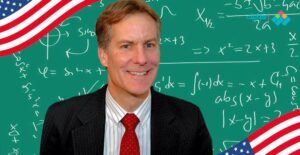 Introducing it
American mathematician Jeffrey Lang was born in Bridgeport, Connecticut in 1954. He received his PhD from Purdue University and is currently a professor in the Department of Mathematics at the University of Kansas.
Rejecting Christianity
In his book The Struggle for Faith, Jeffrey Lange recounts his dramatic experience, which is worth recounting for people to get an idea of the spread of Islam in the West, and how it happens.
The man grew up in a Christian family, and when the religion professor was trying to prove the existence of God with mathematics, Jeffrey Lange, who was a high school student, argued with him about the evidence; the professor got annoyed with him and kicked him out of the class with a warning.
The young man returned home, and when his parents heard the story, they were shocked and said: "You have become an atheist, my son.
Lang says: "He actually lost faith in Western Christianity." Lang remained in this state of atheism for ten years, searching, but what bothered him most was the unhappiness of people in Europe, despite their luxurious lives.
His Islam story
In a flash, the surprise came in the form of a gift from a Saudi family, and Lang describes the Qur'an as follows:
"I felt like I was in front of a psychology professor who was shining a ray on all my hidden feelings, I would try to discuss some issues and find that he was right in front of me, diving into my depths and making me naked in front of the truth."
He converted to Islam in 1980 after being an atheist.
Shoji Futaki. The Japanese doctor
 Shoji Fotaki's Islam is a turning point in the history of Japan, and indeed the entire Southeast Asian region. What is the story of Japanese doctor Shoji Fotaki's conversion? The Japanese doctor
Votaki is a Japanese doctor, who converted to Islam at the age of sixty-seven, with an endearing and charismatic social personality, influencing everyone who comes into contact with him. His religion before Islam was Buddhism, and he was the director of a large hospital in the heart of Tokyo (the capital of Japan), and this hospital was a joint stock company owned by ten thousand people, and Dr Votaki announced since his Islam that he would do everything in his power to bring the ten thousand shareholders into the fold of Islam.
In addition to his work as a hospital director, Dr Futaki was the editor-in-chief of a Japanese monthly magazine called Sekami Jeep in 1954. He was interested in the issue of the atomic bomb that was dropped on Japan and its impact, and tried to raise funds for it. When he failed, he extracted sixty million Japanese yen from ten Japanese companies after threatening to publish secret news affecting their interests, and after long trials he was sentenced to three years in prison, and his medical licence was withdrawn.
Islam Story
He began to read several philosophical, political and spiritual books. The idea of monotheism began to interact with him, and this idea took root when he contacted a number of Islamic figures, including a Muslim man named Abubakar Mori Muto, former president of the Japan Muslim Association, who used to tell him: "The more Muslims in the world, the more the problem of the underdogs on earth will end, because Islam is a religion of love and brotherhood."
After finding guidance in Islam, Futaki, his son and another friend decided to convert to Islam and declared their faith at the Islamic Centre in Tokyo.
Contributions
Shoji Futaki's Islam signalled the Islamisation of the whole of Japan. But why is his Islam a major transformation in Japan?
After his Islam, in March 1975, he came at the head of sixty-eight people to declare their Islam at the Tokyo Mosque, and he also established the Islamic Brotherhood Association.
In addition, on 4/4/1975, the Tokyo Mosque came at the head of two hundred Japanese people who declared their Islam, and thus Dr Shoji Futaki began leading his Japanese brothers to enter the religion of God in droves, until the number of members of the Islamic Brotherhood Association, which he heads, reached nearly twenty thousand Japanese Muslims, and this was in less than one year.
Shoji Futaki's Islam is a turning point in the history of Japan, and indeed the entire Southeast Asian region.
However, there is a phenomenon that has emerged among those who do not know the Arabic language and do not live in Muslim countries, which is some impurities from the influence of jahiliyyah; Dr Shawki Futaki was lenient with the new Muslims of his Islamic association on the issue of prohibiting pork and drinking alcohol, perhaps he has some excuse for his ignorance, and perhaps he wanted to take them gradually. Therefore, the Islamic countries, especially the Arab countries, should send preachers to these countries (2).
The source: Dr Ragheb al-Sarjani's book (Great men who became Muslims).
Douglas Archer
The story of Dr Douglas Archer, Director of the Institute of Education in Jamaica What is the story of Dr Douglas Archer's conversion to Islam? Islam is a unique religion
Douglas Archer, whose Islamic name is Abdullah, was the director of the Educational Institute in Jamaica. Before he converted to Islam, he was a Seventh-day Adventist Protestant and also worked at the University of Illinois in America.
Douglas Archer's story
His story with Islam began when he was giving lectures on psychology at the university, and there were some Muslim students who did not speak English well, so he had to sit with them after the lectures, and through those meetings he became curious about their beliefs and principles, and he was very impressed by them.
One of the important things that sparked his interest in Islam was his study of philosophy, through which he read some things about Islam.
One of the things that made him get to know Islam more closely was a Saudi student in the postgraduate department who lived near him, who talked to him a lot about Islam, gave him a lot of Islamic books, and introduced him to two Muslim professors at the university.
As for the key point that led him to Islam, he said:
"Another important point is that my doctoral research was on education and nation-building, and from here I learnt what nations need for their social, economic and political construction, as well as spiritual construction. I discovered that the basic pillars of Islam provide a great foundation and a valuable base for rebuilding the nation socially, economically and spiritually; therefore, if you ask me: Why did I convert to Islam? Because Islam is a unique religion in which its basic pillars form a rule of judgement that guides both the conscience as well as the lives of its believers."
Douglas Archer's contributions
Douglas Archer defended Islam and said: It is capable of solving the issues and fulfilling the social, spiritual and political needs of those living under capitalism and communism; these two systems have failed to solve human problems, while Islam will offer peace to the unfortunate and hope and guidance to the confused and lost.
Dr Douglas Archer, through his presidency of the Caribbean Educational Institute, is also trying to spread Islam in the West Indies through the institute's scientific programmes, and has toured Saudi Arabia and Kuwait to support his Islamic cause.
The source: Dr Ragheb al-Sarjani's book (Great men who became Muslims).
David Lively
 The story of American David Lively, whose mind and heart could not accept two of the main tenets of Christianity: the doctrines of the Trinity and salvation. What is the story of David's conversion?
David Lively was born in Philadelphia, in the northeastern United States, and studied mathematics until he graduated from Lehigh University with a degree in computer science.
He says of himself: "In my early youth, I and my family attended a Protestant church. Protestantism is the doctrine of the majority of the American people, and I was exposed early on to religious texts and beliefs, but I noticed that my mind and heart did not accept two basic Christian beliefs, namely:
- The doctrine of triangulation (rejected in any form) due to its contradiction with reason.
- The doctrine of salvation attributed to Jesus Christ, peace be upon him, due to its religious contradiction in the field of ethics.
At that time, I rushed to search for a new belief that would protect me from deviation and loss, and fill the spiritual vacuum that American and European youth suffer from and complain about.
David Lively's story
Speaking about himself, David Lively said:
"I was introduced to an American friend who preceded me to Islam, and he had a translation of the meanings of the Holy Qur'an in English, so I took it to add it to my religious books, and as soon as I started reading it, my heart was comforted by the principles that Islam includes, and then I turned to Islam, praying to Allah with these supplications: O Owner of guidance, if this religion called Islam is not your true religion with which you are pleased, then remove me from it and my fellow Muslims, and if it is your true religion, then bring me closer to it and enlighten me in it.
A week did not pass without Islam settling in my heart and taking root in my conscience, so my heart and mind were tranquil and my soul peaceful, and I rested that Islam is truly the religion of God, and the Qur'an is true when it states: {The religion of God is Islam} [Al-Imran: 19]."
David Lively's contributions
Dawud Abdullah al-Tawhidi (this is his name after Islam) tried to alert Muslims to their situation, asking them to change their situation:
"How far is the difference between Islam and the values, morals and ethics it encompasses, and the state of Muslims' ignorance of their faith, their loss of their values, and their departure from the values and ethics of Islam! Muslim rulers have been slow to work for Islam, even though it is their supreme mission, and Islamic scholars have abandoned their true role in da'wah, ijtihad and deduction of judgements. What is required of Islamic scholars is not only to preserve the heritage, but also to return to the implementation of Islamic thought, and then the light of prophecy, faith, application and benefit to others will return to them.
It is surprising that many young people in the Muslim world are moving away from the spiritual values of Islam and away from its teachings, while the youth of the Western world thirst for these values, but do not find them in their secular societies, which know nothing about Islam."
As for the wish of that American Muslim, Daoud al-Tawhidi:
"My wish is to continue my Islamic studies and to specialise in the field of comparative religions so that I can participate in the education of future generations of Muslims in America, counter the intellectual invasion there, and spread Islam among non-Muslims. I also hope that the day will come when I see Islam having an impact on the future reshaping of American society, and that I will participate in the renaissance of Islam throughout the world; for Islam knows no nationalities, but is a guidance sent to the world, and the Holy Qur'an says of the Messenger of Islam: {We sent you only as a mercy to the world} [Al-Anbiya: 107].
The source: Dr Ragheb al-Sarjani's book (Great men who became Muslims).
Hungarian scientist Abdul Karim Germanius
 History will remember the orientalist (Golager Manius) as one of the famous people who converted to Islam in the state of Hungary.
Introducing it
Gulager Manius was born on 6 November 1884, and after his Islam, he gave himself an Islamic name, Abdul Karim Germanius.
Abdulkarim Germanius was able to preach Islam and the Muhammadan message in the midst of his work field, where he was a professor at Laurentian University. Abdulkarim Germanius was followed by a huge number of people from inside and outside the university, and the university even dedicated a chair in Arab and Islamic history in the name of Abdulkarim Germanius.
His Islam story
Dr Abdul Karim Germanius recounts the background of his conversion to Islam: "It was on a rainy afternoon, and I was still in my teens, when I was flipping through the pages of an old illustrated magazine, mixing current events with fictional stories, with descriptions of some distant countries; I had been flipping through the pages indifferently for some time until my eyes suddenly fell on the image of a carved wooden panel that caught my attention, the image was of houses with flat roofs interspersed here and there with round domes that rose gently to the dark sky whose darkness was broken by the crescent moon.
The image captured my imagination, and I felt an irresistible longing to know that light that was overcoming the darkness in the painting. I began to study Turkish, then Persian, then Arabic, and tried to master these three languages in order to be able to enter this spiritual world that spread this dazzling light throughout humanity."
On a summer holiday, I had the good fortune to travel to Bosnia - the closest eastern country to my country - and as soon as I checked into a hotel, I rushed out to see Muslims in their real life, where I came away with a different impression from what is said about Muslims, and this was my first encounter with Muslims. Years and years passed in a life full of travels and studies, and with each passing day, my eyes were opened to new and wondrous horizons.
Despite his extensive travelling in God's world, his enjoyment of the archaeological wonders of Asia Minor and Syria, his learning of many languages and his reading of thousands of pages of scholarly books, he read all this with a keen eye: "Despite all this, my soul remained thirsty."
While he was in India, he saw one night - as a sleeper sees - that Muhammad, the Messenger of Allah, may Allah bless him and grant him peace, was addressing him in a compassionate voice: "Why are you perplexed? The straight path before you is as safe and paved as the surface of the earth. Walk with firm footsteps and the strength of faith." On the following Friday, the great event took place at the Juma Masjid in Delhi, when he professed his Islam in front of witnesses.
Hajj Abdulkarim Jarmanous recalled those emotional moments: "I can't remember what it was at that time, people stood in front of me and hugged me, and the poor, tired people looked at me in supplication, asking for prayers and wanting to kiss my head. I prayed to God not to let these innocent souls look at me as if I were superior to them, for I am but an insect among the insects of the earth, or a wanderer in search of light, helpless like other unfortunate creatures, and I was ashamed before the groans and hopes of these good people. The next day and the day after that, people came in droves to congratulate me, and I received enough love and affection from them to last me a lifetime.
Passion for learning languages
Abdulkarim Germanos learnt Western languages: Greek, Latin, English, French, French, Italian, Hungarian and Eastern languages: Persian and Urdu, and mastered Arabic and Turkish under his professors: Vampyre and Goldziher, from whom he inherited his fondness for the Islamic East. He continued his studies after 1905 at the universities of Istanbul and Vienna: Istanbul and Vienna. He wrote a book in German on Ottoman literature in 1906, and another on the history of Turkish varieties in the seventeenth century, for which he received an award that enabled him to spend an extended period of time in London, where he completed his studies at the British Museum.
In 1912, he returned to Budapest and was appointed professor of Arabic, Turkish and Persian languages, history and culture of Islam at the Oriental High School, then at the Eastern Department of the Economic University, then professor and head of the Arabic Department at Budapest University in 1948, where he continued to teach Arabic language, history of Islamic civilisation, and ancient and modern Arabic literature, trying to find links between the social and psychological revival of Islamic nations, until he retired in 1965.
The Indian poet (Tagore) invited him to India to work as a professor of Islamic history, so he taught it at the universities of: (1929-1932 AD), where he declared his Islam in the Great Mosque of Delhi, delivered the Friday sermon, and took the name Abdul Karim. He came to Cairo and studied Islam with the sheikhs of Al-Azhar, then went to Mecca as a pilgrim, visited the mosque of the Prophet (peace be upon him), and wrote his book on his pilgrimage: Allahu Akbar, which was published in several languages in 1940, and carried out scientific investigations (1939-1941) in Cairo and Saudi Arabia, the results of which he published in two volumes: Shawamekh al-Adab al-Arabi, 1952, and Studies in Arabic Linguistic Structures, 1954.
In the spring of 1955, he returned to spend a few months in Cairo, Alexandria, and Damascus at the invitation of the government to lecture in Arabic on contemporary Arab thought.
His contributions
Dr Abdulkarim Jarmanous left a rich scientific heritage characterised by depth and diversity: The Grammar of the Turkish Language (1925), The Turkish Revolution, Arab Nationalism (1928), Modern Turkish Literature (1931), Modern Currents in Islam (1932), The Discovery and Conquest of the Arabian Peninsula, Syria and Iraq (1940), The Renaissance of Arabic Culture (1944), and Studies in Arabic Language Structures (1954). (1944), Studies in Arabic Linguistic Structures (1954), Ibn al-Rumi (1956), Among the Thinkers (1958), Towards the Lights of the East, Selected Arab Poets (1961), Islamic Culture, Literature of the Maghreb (1964), and he was preparing three books on: Hijra literature, Arab travellers and Ibn Battuta, and the history of Arabic literature.
This Hungarian professor - with his studies, which are known to the Arab world - contributed to spreading the Islamic call and establishing a famous Islamic library in conjunction with the Egyptian Sheikh Abu Yusuf, and the Hungarian government took care of this library, which is still sponsored by it until now in order to preserve the Islamic heritage and history, and encourage Muslims there.
He had the opportunity to make a trip to the desert in 1939 after the exciting adventures he encountered on his way across the sea to Egypt, visited Lebanon and Syria, and then made his second pilgrimage. In the introduction to the 1973 edition of God is Great, he wrote the following: "I visited the peninsula, Mecca and Medina three times, and I published my experiences during my first trip in my book (Allahu Akbar!). In 1939-1940, after the outbreak of the Second World War, I set out across the Danube to reach the sea as a sailor without bothering about the dangers and fatigue. I reached Egypt and from there I sailed to the peninsula. I spent several months in Medina, where I visited the places associated with the life of the Prophet (PBUH): The ruins of the Qiblatain Mosque, the Baqi'a Cemetery, and the sites of the battles of Badr and Uhud. I was a guest of the Egyptian mosque founded by Muhammad Ali in the city. In the evenings, Muslim scholars visited me to talk about the state of Islam in the world. As I explain in my book, I felt from them the spirit of Islam, as strong and deep as ever, despite all the worldly changes in the world, just as I had experienced in my youthful days in the Muslim East." His dream of going from Hejaz to Riyadh with the caravans was realised during the 1939 trip, and he reached Riyadh after four difficult weeks, the details of which he immortalised in his famous book (Under the Faint Light of the Crescent Moon) in 1957.
In his subsequent book, Towards the Lights of the East (1966), he presented his experiences during his travels between 1955 and 1965. He visited Baghdad in 1962 at the invitation of Prime Minister Abdul Karim Qasim to participate in the celebrations held on the occasion of the 1200th anniversary of the founding of Baghdad. He then became a member of the Iraqi Scientific Council and presented a paper at the inauguration ceremony titled: The History of Islam in Hungary: The History of Islam in Hungary. In 1964, the Egyptian government invited him to contribute to the celebration of the millennium anniversary of the founding of Al-Azhar, and in 1965, King Faisal bin Saud invited him to attend the Islamic Conference in Mecca, and he performed the Hajj for the third time while he was there, in the eighty-first year of his age.
He wrote on the history and literature of the Ottoman Turks, researched the contemporary developments of the Turkish Republic, researched Islam and contemporary Islamic intellectual currents, and Arabic literature. He has an important book entitled (History of Arabic Literature) published in 1962, and before that (Arab Poets from Jahiliyya to the Present Day) published in 1961, he wrote about Arab travellers and geographers (Arab Geographers, London 1954), and he has many studies on India. He wrote his books and researches in a number of languages besides Hungarian, such as: English, French, Italian and German. Perhaps his easy and captivating style was behind the spread of his books; thus, Germanos played a pioneering role in introducing Arab culture, Arabic literature, Islam, and the civilisation of the East in general, and successive generations of Hungarians came to know and love his works.
His death
Abdulkarim Germanus died on 7 November 1979, at the age of 96, and was buried according to Islamic rites in a cemetery in Budapest. The Hungarian Geographical Museum in the city of Erd holds the entire archive of this Hungarian Muslim traveller and orientalist.
Emile Brice-Davin. World of Civilisations and Archaeology
Emile presse Daphné was one of the most influential of his French contemporaries who studied Egypt, especially since he was a distinguished and multi-talented figure; he did not limit himself to uncovering Pharaonic antiquities but went beyond them to study Islamic civilisation. The boldness of his discoveries and the recklessness of his adventures are evidence of his insight, keenness of observation, breadth of knowledge, and desire to reach the truth.
He enriched archaeology with extremely important works, to which he devoted many years of continuous effort, sacrificing a large fortune that he had inherited, in addition to the positions he held, until he was able to present fourteen books in addition to articles and studies, the foremost of which are his book (Egyptian Antiquities and the History of Egyptian Art from the Dawn of History to Roman Domination) and his huge encyclopaedia (Arab Art from the Archaeology of Egypt from the Seventh Century to the End of the Eighteenth Century).
Emile Davin's exploits and achievements constitute works worthy of recognition, and his name should shine alongside those of Champollion, Mariette and Maspero in the memory of art history enthusiasts.
In 1829, Brice Davin came to work as a civil engineer in the service of Ibrahim Pasha, then as a professor of topography at the Arkan Harb School in the Khanqah, and as an educator for the Pasha's children. However, due to his arrogance, pride, and disapproval of reprehensible behaviour, he often became irritated and reckless with his superiors to the point of assaulting them, which drew the wrath of them until the incident could end up provoking the governor's anger against him.
The engineer soon became an orientalist and Egyptologist, learning Arabic, its dialects and intonation, and deciphering hieroglyphics. Once he realised his ability to be independent, he resigned from his position in 1837, preferring his freedom as a traveller, explorer and archaeologist.
The Story of Emile Brice-Davin's Islam
Emile Brice-Davin studied Islam carefully, beginning with the Qur'an, the life of the Prophet of Islam and his call, and how the Arabs were just rival tribes fighting each other, and the Prophet was able to make them a unified nation that defeated the two largest empires in the world: The Persian Empire and the Byzantine Empire, and their submission to Muslim rule.
He says about why he became a Muslim:
He noted that the law of Islam is characterised by justice, truth, tolerance and forgiveness, calls for full human brotherhood, advocates all virtues and forbids all vices, and that Islamic civilisation is a humanitarian civilisation that prevailed in the ancient world for centuries.
Emile Davin studied all this and found his heart and mind pulling him to embrace Islam, so he converted to Islam, took the name Idris Davin, dressed as a peasant, and set out to fulfil his mission in Upper Egypt and the Delta.
Contributions of Emile Brice-Davin
Arabs owe Bryce Davin much more in the field of Islamic archaeology than they do in the field of Pharaonic archaeology.
The scholar of civilisations and archaeology, Idris Davin, was able to resurrect the Pharaonic and Islamic civilisations from their slumber, and bring back to us the vibrant and accessible Arabic humanistic art, which is what Islam owes to this French-Muslim orientalist.
The source: Dr Ragheb al-Sarjani's book (Great men who became Muslims).
Christopher Chamont
One of the world's most famous economists, he converted to Islam and changed his name from Christopher Hamont to Ahmed.
But what made the famous economist convert to Islam? This is what we will find out through his story of Islam.
Christopher Chamont's story
As for the story of Christopher Chamont's Islam, it began when he began to doubt the story of (triangulation), for which he did not find a convincing explanation except in the Holy Qur'an. He found his way to Islam, understood its nature and greatness, and found what he was looking for about the process of triangulation when he read in the Holy Qur'an that Jesus (peace be upon him) is a messenger from God, that he is human, and that there is only one God who is worthy of worship and obedience.
Christopher Chamont began to learn more about Islam by reading the Holy Qur'an translated into English, and also reading some translated books about Islam, as he was working in Saudi Arabia and this gave him the opportunity to socialise with Muslims of different nationalities:
"My interactions and discussions with Muslims of different nationalities had a great impact on my knowledge of Islam, as I found myself driven to want to learn about the philosophy of Islam."
This is how Christopher Chamont came to know Islam, and this is how he found the truth he was looking for, and stuck to it despite his fame as one of the world's most renowned economists.
Christopher Chamont's contributions
Christopher Chamont called on Muslims to adhere to the teachings of their religion because it is the reason for their success:
"The teachings of Islam are great, and if Muslims adhered to them, they would reach the highest levels of progress, power and civilisation, but Muslims are inward-looking, which has made others surpass them, although the early Muslims were the first to follow the path of civilisation and scientific, social and economic progress."
Christopher Chamont has shown that the teachings of Islam are the way to achieve progress and advancement, that the lack of adherence to them is the reason for the backwardness of Muslims, and that the return of Muslims to adhere to their worship is the key to their progress and success.
Ahmed Chamont also spoke about Islam, saying:
"Islam is the religion that addresses man's mind and puts his hand at the beginning of the path to achieve happiness in this world and the hereafter. I have found in Islam what I was looking for, and any issue that man faces can find its solution in the Holy Qur'an."
The source: Dr Ragheb al-Sarjani's book (Great men who became Muslims).
Orientalist Hussein Ruf. Religion and Sociology
Born in 1916 to Christian and Jewish parents in England, Mr Rove, an English orientalist and sociologist, began his life by studying the faith of his Christian and Jewish parents, then moved on to study Hinduism and its philosophy, especially its modern teachings, and the Buddhist doctrine, comparing it with some ancient Greek doctrines, then he studied some modern social theories and doctrines, especially the ideas of the great Russian scientist and philosopher Leo Tolstoy.
Orientalist Hussein Ruf's story of Islam
Mr Ruf's interest in Islam and his study of Islam came late in relation to other religions and faiths, despite his stay in some Arab countries; his first exposure to Islam was through his reading of a translation of the Holy Quran made by Rodwell, but he was not influenced by it because it was not a faithful and honest translation, like many similar translations, tainted by ignorance or hostile purposes, which were issued in several foreign languages.
However, fortunately for him He met an educated and sincere advocate of Islam who is passionate about it and sincere in communicating it to people, so he introduced him to some of the facts of Islam and guided him to one of the translated versions of the meanings of the Holy Quran, translated by a Muslim scholar, to which he added a clear and convincing explanation based on logic and reason, as well as clarifying the true meanings that the English language is unable to show. He also guided him to some other Islamic books that are characterised by sincerity and clear proof. All this allowed him to form an initial idea about the truth of Islam, which aroused his desire to increase his knowledge of it and its principles and objectives through non-prejudiced scientific sources.
His contacts with some Islamic groups and his close study of their conditions confirmed the extent of the influence of Islam on their behaviour and associations; this confirmed his initial idea of the greatness of Islam, and he believed in it fully.
Why did this English orientalist become a Muslim?
He describes his experience of converting to Islam:
"One day in 1945, I was invited by some friends to watch the Eid prayers and eat after the prayers, which was a good occasion for me to see up close that international crowd of Muslims, without national or racial fanaticism... There I met a Turkish prince and next to him many destitute people, all of whom sat down to eat, and you do not see in the faces of the rich people an artificial humility or a false pretence of equality, as the white man looks when he talks to his black neighbour, nor do you see among them those who retire from the congregation or move to one side or a remote corner, nor do you see among them that ridiculous class feeling that can hide behind false curtains of virtue."
"It is enough for me to say after reflection and contemplation: After studying all the other known religions in the world, I found myself spontaneously guided to believe in this religion without being attracted to it, and without being convinced by any of them."
He then praised the morality, tolerance and generosity of Muslims, and pointed to Islam's ability to address the issue of social inequality and class conflict by saying:
"I have travelled to many countries across the globe, east and west, and I have had the opportunity to see how the stranger is received in each place, and to know where honouring him is the first thing that comes to mind, and that the first custom is (inquiring about him and the interest or benefit that may come from helping him)... I did not find any non-Muslims who are equal to them in receiving the stranger, welcoming him, honouring him and showing him kindness without expecting a return or without expecting a benefit... Economically, we find that only Islamic groups have eliminated the differences between the rich and the poor in a way that does not push the poor to overturn the structure of society and stir up chaos and hatreds."
Contributions of Orientalist Hussein Ruf
The English Muslim orientalist Hussein Ruf was one of the most prominent European social researchers who studied religions and social doctrines in depth. He was impressed by the greatness of Islam, the loftiness of its goals and principles, its superior ability to solve the problems and confront the troubles suffered by individuals and human societies, and its wondrous suitability for different environments and civilisations, regardless of their differences and disparities.
After his Islam, it was natural for him to take the initiative to preach this religion, which possessed his heart, mind and feelings; to enlighten his compatriots about its tolerant principles and lofty goals, while refuting the flood of lies and demolishing the edifice of illusions and falsehoods attached by the opponents of Islam to it.
God is true when He says: {Who has a better speech than someone who calls to God, does good deeds, and says that I am of the Muslims} [Faslat: 33].
The source: Dr Ragheb al-Sarjani's book (Great men who became Muslims).
Dr Hamid Markus German scientist and journalist
The story of Dr Hamed Markus, the German scientist who was fascinated by the Qur'an Dr Hamed Markus is a German scientist and journalist who was fascinated by the style of the Qur'an. German scientist and journalist
From my childhood, I felt an urge within myself to study Islam as much as I could, and I took care to read a translated version of the Quran in the library of the city where I grew up, which was the edition from which Goethe got his information about Islam.
I was impressed by the Qur'an's marvellous intellectual approach while enforcing Islamic teachings, and I was also struck by the great spirit of perseverance that these teachings aroused in the hearts of the early Muslims.
In Berlin, I had the opportunity to work with Muslims and enjoy the enthusiastic and exciting talks given by the founder of the first Islamic association in Berlin and the founder of the Berlin Mosque on the Holy Quran. After years of practical co-operation with this outstanding personality, I saw in him his selflessness and spirit, and I believed in Islam, as I saw in its lofty principles, which are considered the pinnacle in the history of human thought, what complemented my personal views.
Faith in God is a fundamental doctrine in the religion of Islam, but it does not call for principles or doctrines that are incompatible with modern science, so there is no contradiction between faith on the one hand and science on the other, and this is undoubtedly a great and unique feature in the eyes of a man who has contributed all his energy to scientific research.
The Islamic religion is not just a deafening theoretical teaching that runs blindly on the margins of life, but it calls for an applied system that colours human life. The laws of Islam are not compulsory teachings that lock up personal freedoms, but directives and guidelines that lead to organised individual freedom.
As the years went by, I became more and more convinced of the evidence that Islam is the best way to harmonise the personality of the individual and the personality of the group, linking them together with a strong and solid bond.
It is a religion of righteousness and tolerance, it is always calling for goodness, exhorting it and promoting it in all circumstances and occasions.
Source: Book (Journey of Faith with men and women who became Muslims) by: Abdul Rahman Mahmoud.
The story of the 3 most famous British converts to Islam in the Victorian era
At the height of the age of empire, Britons decided to leave Christianity and convert to Islam. Here are the stories of three of these pioneers who challenged the norms of the Victorian era at a time when Christianity was a cornerstone of British identity, according to the BBC.
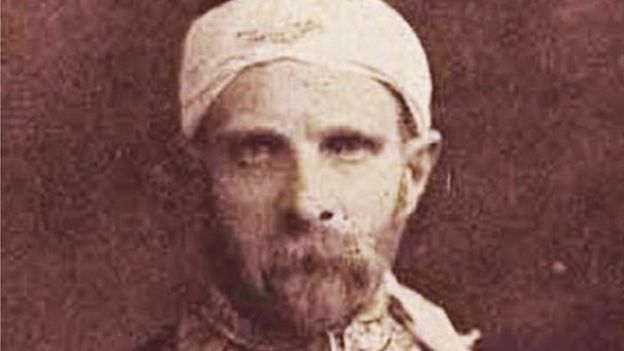 William Henry Quilliam
Abdullah Quilliam
Lawyer William Henry Quilliam's interest in Islam began after he saw Moroccans praying on a ferry during a break in the Mediterranean in 1887.
Quilliam said: "They were not at all disturbed by the strong winds or the rocking of the ship. I was deeply moved as I looked at their faces and expressions, which showed complete faith and sincerity“.
After gathering information about the religion during his time in Tangier, Quilliam, who was 31 at the time, converted to Islam and described his new faith as "sensible and logical" and that he felt on a personal level it did not conflict with his beliefs.“.
Although Islam does not require converts to change their names, Quilliam chose the name "Abdullah" for himself.“.
After returning to England in 1887, he became a religious propagandist, and it is said that thanks to his efforts some 600 people converted to Islam throughout Britain.
 In 1894, the Ottoman Sultan bestowed on Quilliam the title of Sheikh of Islam in the British Isles with the approval of Queen Victoria
Quilliam also established the country's first mosque in the same year in Liverpool, considered by many at the time to be the 'second city of the British Empire'.“.
Queen Victoria, whose country was ruled by more Muslims than the Ottoman Empire, was among those who requested a booklet written by Quilliam entitled The Religion of Islam, in which he summarised the religion of Islam. The booklet was translated into 13 languages.
She reportedly ordered six additional copies for her family, but her desire for more knowledge did not sit well with the wider community who believed that Islam was a religion of violence..
In 1894, the Ottoman Sultan bestowed on Quilliam the title of "Sheikh of Islam in the British Isles", with the approval of Queen Victoria, a title that reflected his leadership in the Muslim community.
Many Liverpool residents who have converted to Islam have faced resentment and mistreatment for their faith, including being attacked with bricks, rubbish and fertiliser, despite the official recognition of the religion.
Quilliam believed the attackers had been 'brainwashed into thinking we were evil'“.
Known locally for his work with disadvantaged groups, trade union advocacy and divorce law reform, Quilliam's legal career took a turn for the worse when he sought to help a client seeking a divorce.
 Quilliam was involved in the construction of Britain's second oldest mosque in Woking
A trap was laid for the husband who was allegedly committing adultery, a common practice at the time, but his attempt was unsuccessful and Quilliam was suspended from his job.
He left Liverpool in 1908 to minimise the impact of the scandal on Muslims in the city, and reappeared in the south as Henri de Leon, although many knew him, according to Ron Davies, who has written a biography of Quilliam.
Although his influence waned, he was involved in the construction of the country's second oldest mosque, built in Woking, and was buried in Surrey in 1932.
The Liverpool Mosque still bears his name.
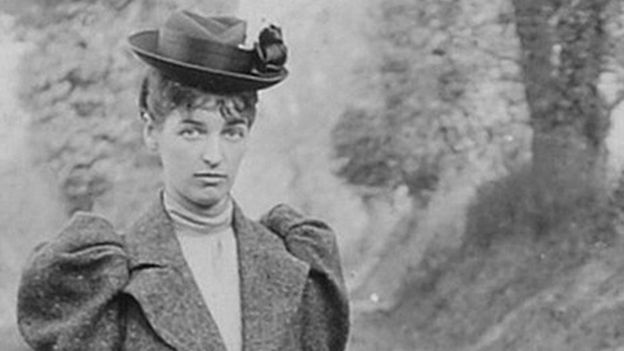 Lady Evelyn
Evelyn Cobbold's hands
It was no surprise that a member of the upper class was fascinated by Islam and inspired by travelling to Muslim lands.
Born to an aristocratic family in Edinburgh, Lady Evelyn Murray spent much of her childhood between Scotland and North Africa.
She wrote: "I learnt Arabic there, I was happy to escape my nanny and visit mosques with Algerian friends, I was an involuntary Muslim at heart“.
At her family's estate in Dunmore Park, Evelyn used to chase deer and fish for salmon.
Her explorer father, the 7th Earl of Dunmore, was keen on travelling, including to China and Canada. Her mother, who later became Queen Victoria's lady-in-waiting, was also an avid traveller.
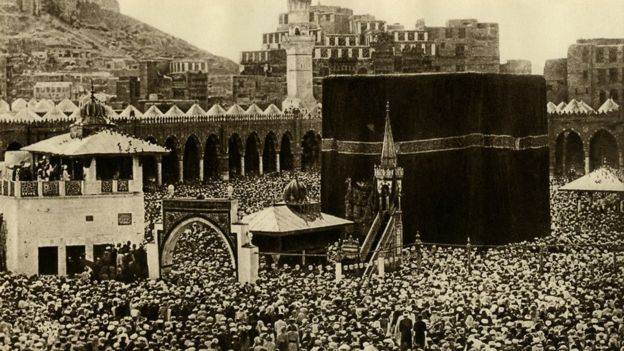 Lady Evelyn is the first British woman to perform the Hajj
Lady Evelyn inherited a love of travelling from her parents and met her husband, businessman John Cobbold, in Cairo, Egypt.
It is not known when Lady Evelyn converted to Islam, the seed may have been planted during childhood travels, but Lady Evelyn's faith seems to have been solidified after a holiday in Rome and a meeting with the Pope.
Afterwards, she wrote: "When His Holiness suddenly addressed me and asked me if I was a Catholic, I was surprised for a moment and then I replied, 'I am a Muslim, and I don't know what possessed me, because I hadn't thought about Islam for years. The journey began and I was determined to read and study religion“.
Historian William Vasey, who wrote the foreword to Lady Evelyn's Diary, said that the spiritual aspect of the religion attracted many converts..
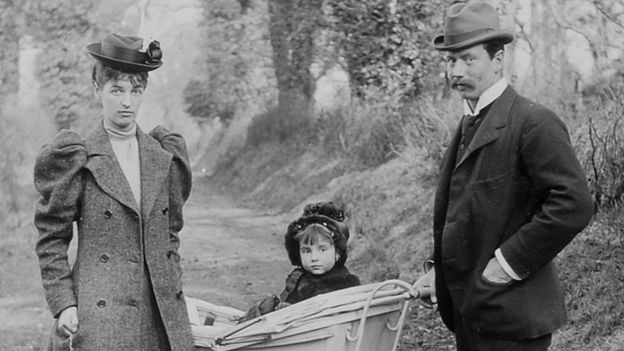 Lady Evelyn, her husband John Cobbold and her daughter
He added that they followed "a belief that all major religions share a transcendent unity. Away from the superficial doctrinal details that divide them“.
Lady Evelyn's Arab friends in the Middle East referred to her as "Lady Zainab", she had access to women's areas and wrote about the "dominant influence of women" in Islamic culture.
At the age of 65, she performed the Hajj and was the first British woman to perform the entire pilgrimage..
This gave her "endless interest and admiration", and her story was subsequently published in a book titled Pilgrimage to Mecca.“.
Little is known about her life after she briefly travelled to Kenya. She died at Inverness Nursing Home in 1963 at the age of 95, with her will that bagpipes be played at her funeral and that a Qur'anic verse, 'The Sign of Light', be inscribed on her tombstone.
She wrote in her diary: "I have always asked myself when and why I became a Muslim“.
She added: "My answer is that I don't know the exact moment when the truth of Islam became clear to me.“.
"It seems that I have always been a Muslim“.
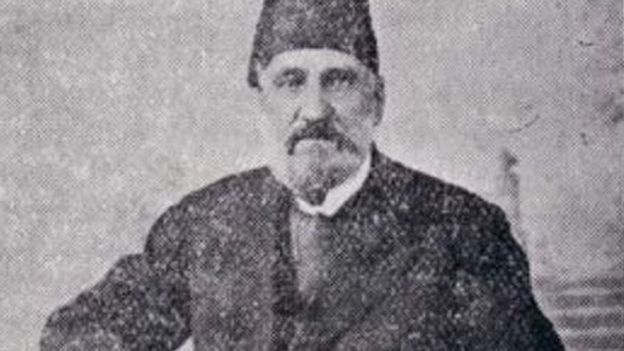 Robert Stanley converted to Islam at the age of 70
Robert Stanley
Stories of Muslim history in the Victorian era are usually dominated by those belonging to the upper echelons of society, whose stories are better preserved.
But Christina Longden, who discovered that her grandfather was Muslim after her father researched the family tree and kept written documents and a diary, said: "Generally there are signs that it's a middle-class thing.“.
Robert Stanley rose from a working-class grocer to become the Conservative mayor of Stalybridge, a town near Manchester, in the 1870s.
Longden, who wrote a book about him, says Stanley was also a judge and set up a fund for workers fired for not voting with their bosses.
I also found that he regularly wrote about British colonialism in the newsletter of the Quilliam Mosque in Liverpool.
He met Stanley Quilliam in the late 1890s after he retired from politics, and the two struck up a close friendship.
Longden says: "Robert was 28 years older than Quilliam, so I think there was a bit of a father-son relationship between them.“.
However, he did not convert to Islam until the age of 70 and chose the name "Rashid" for himself.“.
From her research, Longden believes that there were "no other Muslims" in Stourbridge at the time. Stanley then moved to Manchester, where he died in 1911.
His conversion to Islam was kept secret until it was discovered by the Longden family in 1998.
Coincidentally, Longden's brother, Stephen, converted to Islam in 1991 after studying in Egypt as part of his degree, seven years before Grandpa Stanley's Islam was discovered.
When he heard about his grandfather's conversion, he described it as an "amazing surprise".“.
"The fact that there is a man who chose to be a Muslim at a time when you can't imagine someone doing something so unconventional, when you sit down and think about it, yes, it's Manchester," he said, adding: "People aren't afraid to stand up and speak up for what they believe in, whether it's political or religious“.
Malcolm X, the man who died standing up

This important figure had a great merit - after Allah - in spreading the Islamic religion among black Americans, at a time when blacks in America were suffering severely from racial discrimination between them and whites, and were subjected to humiliation and humiliation, and suffering the torments of torture and hatred from them
In this turbulent climate of oppression and humiliation, Malcolm X was born to a father who was a pastor in a church and a mother from the West Indies. When he was six years old, his father was killed by the whites after they smashed his head and put him in the path of an electric bus that ran over him until he died. Malcolm X's family began to deteriorate rapidly. financially and emotionally. They lived on handouts and social assistance from whites, which they were reluctant to give. With these harsh conditions, Malcolm X's mother suffered a psychological trauma that developed until she was admitted to a mental hospital where she spent the rest of her life, and Malcolm X and his eight sisters suffered the bitterness of losing both father and mother, and they became children under the care of the state, which distributed them to different homes...
In the meantime, Malcolm X attended a nearby school where he was the only black student. He was smart and bright and outperformed all his peers, so his teachers were afraid of him, which led them to destroy him psychologically and morally, and ridicule him, especially when he wanted to continue his studies in the field of law... This was the turning point in his life. He dropped out of school and moved between different degrading jobs befitting a Negro. From a waiter in a restaurant a railway labourer to a shoe shiner in a discotheque. Until he became a well-known dancer, then he was tempted by a life of frivolity and loss and began to drink alcohol and smoke cigarettes, and found gambling to be his main source of saving money. Until he ended up using drugs and even trafficking in them, and then stealing houses and cars. All this when he was not yet twenty-one years old. Until he and his mates were caught by the police. They sentenced him to an exaggerated sentence of ten years' imprisonment, while for whites the prison term did not exceed five years.
In prison, Malcolm X refrained from smoking or eating pork, and he devoured thousands of books in various fields of knowledge, establishing a high culture that enabled him to complete the deficiencies in his personality.
During that time, all of Malcolm X's brothers were converted to Islam by a man called Mr Mohammed Elijah. All of Malcolm X's brothers were converted to Islam by a man called Mr Mohammed Elijah, who claimed to be a prophet of God sent only to blacks. They endeavoured to persuade Malcolm X to convert to Islam by various means until he became a Muslim. His morals and character improved, and he began to participate in speeches and debates inside the prison to preach Islam. Until he was pardoned and released so that he would not continue to preach Islam in prison
Malcolm X was affiliated with the Nation of Islam movement, which had misconceptions and racist foundations that were incompatible with Islam, despite its use of Islam as a shiny slogan. They were intolerant of the black race and made Islam exclusive to them and not to other races, while they had the virtuous morals and high values of Islam... In other words, they took from Islam its appearance and left its essence and experience.
Malcolm X continued in the ranks of the Nation of Islam, inviting people to join it with his eloquent speeches and strong personality. He was an indefatigable helper and a tireless arm of strength, vigour and aggression ... until he was able to attract many people to join this movement.
Malcolm X wished to perform the Hajj, and when he travelled, he saw the true Islam up close and personal, and realised the error of the racist doctrine he was espousing and advocating. He embraced the true Islamic religion and called himself Hajj Malik Shabazz.
When he returned, he devoted himself to preaching true Islam and tried to correct the misguided concepts of the Nation of Islam. However, he was met with hostility and hatred from them, and they began to harass and threaten him, but he did not care, and he continued to walk in a clear and firm footsteps calling for true Islam that eliminates all forms of racism.
In one of his eloquent sermons to preach the call to God, the tyrants refused to silence the voice of truth. They assassinated him while he was standing on the podium preaching to the people when sixteen treacherous bullets were fired at his long, slender body. And that was the end. We pray that Allah accepts him in his final resting place. We ask God to accept him among the martyrs on the Day of Judgement
.
Muhammad Ali Clay
 Muhammad Ali Clay, born Cassius Marcellus Marcellus Clay Jr. born 17 January 1942, is an American former professional boxer who is considered a cultural icon and a beloved figure by all, despite the criticism he has received.
His Islam
He changed his name by which he was known as "Cassius" to "Muhammad Ali" only without the nickname "Clay" which means mud in English after he converted to Islam in 1964 and did not care about what would happen in terms of detracting from his popularity, which increased and people's love for him swept the horizons and the Islamic religion was an important reason for his success and in 1966 he surprised the world again after Muhammad Ali announced his refusal to join the US army in the Vietnam War and said : The Islamic religion forbids wars that are not for the sake of Allah and His Messenger and for the sake of raising the banner of Islam, as he stated, "I will not fight them ... because they did not call me a nigger ...He did not care that his popularity with Americans decreased with this statement and he was arrested and convicted of draft evasion, stripped of his boxing title, had his licence suspended and did not fight for 4 years after he appealed his sentence in the Supreme Court of the United States of America and eventually won this case to return to the boxing ring again.
Boxing
He went on to win the heavyweight championship of the world 3 times and Ali participated in several historic fights, perhaps the most prominent three fights, the first of which was with the strongest competitor "Joe Frazier" and another with "George Foreman", where he regained his title that was stripped from him for seven years and Ali was characterised by his unconventional fighting style Ali was distinguished by his unconventional fighting style, dodging like a butterfly, attacking like a bee, skill and courage to withstand punches until he became the most famous in the world, as he is the owner of the fastest punch in the world that reached a speed of 900 kilometres per hour, as he was also known for his speech before his matches, as he relied heavily on media statements
His illness
Muhammad Ali was afflicted with Parkinson's disease, but he remains a beloved sports icon to this day. During his illness, he was extremely patient as he always said that God afflicted him to tell him that he is not the greatest, but that God is the greatest.
Honored
In Hollywood, there is a very famous street called "Celebrity Street" for painting a star on the street in the name of all their star celebrities.
When they offered the Muslim boxer Muhammad Ali Clay to have a star painted in his name on the street, he refused, and when they asked him why he refused to have his name immortalised on the street with a star?
He told them, "I am named after the prophet I believe in, Muhammad (peace be upon him), and I absolutely refuse to draw the name 'Muhammad' on the ground."
But in honour of his popularity and the success he achieved throughout his career, Hollywood decided to paint the star "Muhammad Ali" on a wall in the street and not on the ground like other celebrities.
To this day, there is no celebrity whose name is on the wall other than Muhammad Ali. The rest of the celebrities have their names on the floor.
His charitable works
In 2005, Muhammad Ali Clay established a centre in his hometown of Louisville called the Muhammad Ali Centre, where he currently displays memorabilia, and works as a non-profit organisation to spread the ideas of peace, social prosperity, helping those in need, and the noble values that Muhammad Ali Clay believed in.
Abdullah Al-Tarjman
 Abdullah al-Mayurki, or Abdullah al-Mayurki, known as Abdullah al-Tarjaman, was a Spanish Christian on the island of Mallorca and a highly respected priest. He was also one of the greatest Christian scholars in the eighth century AH, and his name before he was converted (Anselm Tormida), but when God explained Islam to him, he called himself al-Tarjaman He wrote the book "Tahfat al-Areeb in Reply to the People of the Cross" in Arabic in 823 AH, then translated into French and published in the Journal of the History of Religions in Paris in 1885.
The Story of Abdullah Al-Tarjman's Islam
Abdullah al-Tarjuman narrated the story of his Islam in his book Tahfat al-Areeb: When I was six years old, I was handed over to a priestly teacher and I read the Bible until I memorised more than half of it in two years, then I began to learn the language of the Bible and the science of logic Then I travelled from Mallorca to the city of Llarda in the land of Catalonia, which is the city of knowledge among the Christians in that country, and in this city the Christian students of knowledge gather, so I read natural sciences and stars for six years, and then I read the Bible and taught it for four years.
Then I went to the city of Baluniya and lived there, which is a city of knowledge and has a church for a priest of great age and fate named Naghlomartil, and his status in science, religion and asceticism was very high, so questions about the religion of Christianity and gifts came to him from kings and others, and they even wanted to be blessed by him and accept their gifts and were honoured by this, so I read the basics of the religion of Christianity and its rules to this priest and kept getting closer by serving him and doing many of his jobs until he made me one of his best specialists and paid me the keys to his residence and the coffers of his food and drink. I stayed with him by reading and serving him for ten years, then one day he fell ill and was unable to attend his reading council and the people of the council waited for him, discussing matters of knowledge until they came to the words of Jesus, peace be upon him, "A prophet will come after me whose name is Baraklit." They discussed the appointment of this prophet and who he is from the prophets and each one of them said according to his knowledge and understanding, so they had a great argument and then left without gaining any benefit in that matter.
I told him about the difference between the people on the name of the Paraclete and that so-and-so had answered this way and so-and-so had answered that way, and I listed their answers. He said to me, "What did you answer?" I said, "The answer of Judge so-and-so in the interpretation of the Gospel." He said to me, "You are close and close, and so-and-so was wrong, and so-and-so almost came close, but the truth is the opposite of all this, because the interpretation of this honoured name can only be known by scholars who are well established in knowledge, and you have little knowledge of the knowledge you have attained.
I rushed to his feet, kissed them and said to him: "Sir, you know that I have travelled to you from a distant country and have been in your service for ten years, in which I have obtained a number of sciences from you that I cannot count, so perhaps it would be a great favour for you to grant me the knowledge of this noble name. The Sheikh wept and said: "My son, by God, you are very dear to me for your service to me and your devotion to me, and the knowledge of this holy name is of great benefit, but I fear that if you show it, the Christians will kill you at once."He said: "O my lord, you know that I have travelled to you from a distant country.
So I told him: "O sir, by Allah, and by the truth of the Gospel and those who came with it, I will not speak anything of what you tell me except at your command. He said to me: "My son, I asked you when you first came to me about your country and whether it is close to the Muslims and whether they approve of you or you approve of them in order to test your dislike of Islam. Know, my son, that the Baraklit is one of the names of their prophet Muhammad, and on him the fourth book mentioned in the tongue of Daniel, peace be upon him, was revealed and he told that this book would be revealed to him and that his religion is the religion of truth and his school is the white school mentioned in the Injil.
I said: "Sir, what do you say about the religion of these Christians?" He said: "My son, if the Christians had stayed in the religion of the first Jesus, they would have been in the religion of God, because Jesus and all the prophets are in the religion of God. I said, "Sir, how can I get out of this matter?" He said, "My son, by entering the religion of Islam. I said to him: "Does the one who enters into it survive?" He said: "Yes, he will survive in this world and the hereafter.
I told him: "My lord, a wise man does not choose for himself anything but the best of what he knows, so if you know the virtues of the religion of Islam, what prevents you from it?" He said to me: My son, Allah did not reveal to me the truth of what I told you about the virtue and honour of the religion of Islam until after my old age and weakening of my bones. There is no excuse for us in this, but Allah's argument against us stands, and if Allah had guided me to this while I was at your age, I would have abandoned everything and entered the truth, and love of the world is the head of every sin, and you see what I am in among the Christians of high prestige, fame, glory, honour and many worldly offers, and if I showed any inclination towards the religion of Islam, the public would kill me as soon as possible.
If I had escaped from them and reached the Muslims and told them that I had come to you as a Muslim, they would say to me, "You have benefited yourself by entering the religion of truth, so do not grant us a religion in which you have saved yourself from God's punishment." I would remain among them as a poor old man of ninety years old, not knowing their language and not knowing my right, and I would die of hunger among them.
I am, thank God, on the religion of Jesus and what he came with, and God knows that about me. So I said to him: "Sir, do you give me permission to go to the country of the Muslims and enter their religion?" He said to me: "If you are sane and want to survive, you should do so, so that you will get the world and the hereafter. But my son, this is something that no one is present with us now, so keep it secret to the best of your ability, and if any of it appears to you, the public will kill you for your time, and I cannot help you, and it does not benefit you to report it from me, because I deny it and my word is true for you and your word is not true for me, and I am innocent of your blood if you lose any of this.
Then I took the reasons for the journey and bid him farewell. He prayed for me well and provided me with fifty gold dinars. I boarded the sea, departing for the country of Majorca, where I stayed for six months, then travelled from there to the city of Sicily, where I stayed for five months, waiting for a boat to go to the land of the Muslims. A boat travelling to Tunis came, so I travelled from Sicily in it.
I stayed with them in their hospitality for four months, after which I asked them whether there was anyone in the Sultanate House who knew the tongue of the Christians, and the Sultan at that time was Mawlana Abu al-Abbas Ahmad, may Allah have mercy on him, and the Christians mentioned to me: I was very happy about this, and I asked about the residence of this doctor, which I was shown, and I met with him and explained to him my situation and the reason for my coming to Islam, and he was very pleased that this good deed would be completed by his hands.
Then he mounted his horse and carried me with him to the Sultan's house. He entered and told him about my conversation and asked his permission for me to appear before him. The first thing he asked me was my age, and I told him thirty-five years, and then he asked me what I had read from the sciences: I said to the interpreter, who is the said doctor, "Tell our Sultan that he does not go out: Tell our Sultan that no one comes out of his religion without his people saying and slandering him, so I would like you to send to the Christian merchants and good people in your presence and ask them about me and hear what they say about me, and then I will become a Muslim, God willing, so he said to me through the interpreter: You asked as Abdullah Ibn Salam asked: You asked as Abdullah Ibn Salam asked the Prophet (peace be upon him) and then he became a Muslim.
He sent for the choice Christians and some of their merchants and put me in a house close to his council, and when the Christians entered he said to them: "What do you say about this new priest who came in this boat?" They said, "O our lord, this is a great scholar in our religion, and we have never seen a higher degree of knowledge and religion than him." He said, "What do you say about him if he becomes a Muslim?" They said, "We forbid God from that, he would never do that." When he heard what the Christians had to say, he sent for me, and I came before him and testified the truth in the presence of the Christians, and they fell on their faces and said, "He only got him to do this for the love of marriage, because our priests do not get married.
When I was determined to get married, he gave me a hundred gold dinars and a good full suit of clothes, so I took my wife and a son was born to me, whom I named Muhammad in honour of our Prophet Muhammad, may Allah bless him and grant him peace[1].
Fatima Herin
The true meaning of Islam is for believers to surrender their entire being to Allah, the Almighty, in their own selves, and in the small and large of their affairs.
They should surrender to the hand that leads them, confident that it wants good, advice and guidance for them, and they are assured of the path and destiny in both this world and the hereafter; in accordance with the words of Almighty God: {Say that my prayer, my rituals, my living and my dying are for God, the Lord of the Worlds * There is no partner for Him, and thus I have ordered, and I am the first of the Muslims} [Al-Anam: 162, 163].
This was the issue that preoccupied Fatima Heeren, a German girl who converted to Islam after growing up with National Socialism, in which the role of God is absent from any of the affairs of creation or their daily lives.
Nationalist slogans
Fatima Herrin was born in Germany in 1934 to a father who worked in the German army and cherished National Socialist values.
When the Second World War ended in 1945, Fatima was an eleven-year-old student. The dreams of the German nation were shattered, and all the ideals for which lives had been sacrificed were shattered.
In the years leading up to and during the war, nationalism was an excellent way to push the Germans to the limit, with the only concern being to do everything for the motherland.
This nationalism had an impact on the idea of the existence of God. For German society, God was the power that established the laws of nature millions of years ago, and these laws, in turn, created human beings, most likely by chance.
Fatima Hirin says of her community's state of mind at the time: "Christianity was the only faith that really confronted us, and it was presented to us as 'the opium of the peoples', the faith of the sheeple who only move out of fear of death.
We understood that each person is responsible for himself or herself and is free to do whatever he or she wants as long as it does not harm others, and we imagined that conscience is the only guiding light.
Many people like me were unhappy with the way modern society works, but they still claimed to be happy, and when they woke up after a night of dancing and drinking, they felt an emptiness in their chest that could not be overcome with more dancing, drinking or flirting in the following evenings."
When the Second World War came to an end, Fatima said: "Not only did the war tear apart our country (Germany), but the greatness of our nation was shattered and all the ideals for which lives were lost.
I realised that individual conscience and society's accepted humanitarian ideals alone are not enough to serve as guiding lights in my life. I did not feel truly happy enjoying the bliss that was available to me without thanking anyone for all the goodness that was bestowed upon me. I kept a daily diary, and once I found myself recording the following statement: "It has been a joyful day; thank you very much, O Lord!
At first I felt ashamed with myself, but then I realised that it was not enough for me to just believe in a God... I knew it was my duty to seek him out, to look for a way to thank him and worship him."
The invalidity of Christianity
After the failure of her country's nationalist project in terms of culture and faith, Fatima Herin turned to Christianity in order to find the path to God: A priest advised me to convert to Christianity and to go to the Lord's Supper. He said: "Because when you practice the Christian religion, you will surely find a way to God." I followed his advice, but I did not fulfil the promise of the Lord's Supper. I followed his advice, but I did not succeed in achieving true peace of mind."
Fatima Hirin explained the reason behind her disappointment in Christianity: "We Christians have to accept compromises in our faith in order to live in our society; the Church is always ready to make compromises in order to maintain its power in our society, to give one example: The Church says: Sexual relations should not begin until after marriage in the name of God, but almost no man or woman in the West "buys the cat in the bag", which is a common proverb that means that one enters marriage without first testing the sexual compatibility of the two partners with each other.
The priest is always ready to absolve anyone who confesses this sin with one or two prayers."
In contrast to the above, Islam calls upon its followers, in the name of faith, to surrender their whole being to Allah, the Almighty, without hesitation and without turning away; a surrender after which no rebellious remnant of perception or feeling, intention or action, desire or fear will remain that does not submit to Allah and accept His rule and judgement; as the Almighty says {O you who believe, enter into peace as a whole and do not follow the footsteps of Satan, for he is a clear enemy to you [Al-Baqarah: 208].
Fatima Hirin and the Road to Islam
Fatima Hirin was looking for a perfect principle to hold on to, a straight path to set her whole life on, so she could not get close to God even when she knelt in church.
In 1957, Fatima Herren first met the man who was to become her husband two years later, a German Muslim with a doctorate in philosophy.
But when he told me that he had converted to Islam seven years ago, I was so surprised that I wanted to know why an educated man like him had chosen this path.
My husband explained to me the meaning of Islam: Allah is not only the Lord of Muslims, but this word "Allah" is synonymous with "divinity" for us, and that Muslims believe in the absolute oneness of the Creator, and that they do not worship their prophet Muhammad, peace be upon him, as Christians worship Jesus Christ, and that the word "Islam" means complete submission to the one and only God.
He told me that all beings and everything are necessarily taken for granted from the Islamic point of view; that is, they must submit and surrender to the laws of God, and if they do not, they are threatened with annihilation.
He added: The human being alone - regardless of whether his body is Muslim voluntarily or involuntarily - is endowed by God with freedom of will and choice to decide whether he wants to be Muslim in both his spiritual and physical life. If he does so and lives according to this decision, then he will connect with God and will find harmony and psychological peace with other creatures in this worldly life, and will find happiness in the hereafter.
But if he rebels against the laws of God, which are clearly and magnificently revealed to us in the Holy Qur'an, he is a loser in this life and in the next."
Fatima adds about what she discovered about Islam: "I also learnt from my husband that Islam is not a new religion; in fact, the Qur'an is the only book that is free from any deviation or flaw, and it is the last heavenly book in a long series of books, most notably the revelations in the Torah and the Gospel.
Under my husband's guidance, I started reading the few books available on Islam in German, namely the few books available from the Islamic point of view, the most important of which was Muhammad Asad's The Road to Mecca, which was a great source of inspiration for me.
A few months after our marriage, I learnt how to pray in Arabic, how to fast, and studied the Holy Quran, all before I converted to Islam in 1960.
The wisdom of the Qur'an filled my soul with love and admiration, but the apple of my eye was in prayer; I felt a strong sense that God was with me as I stood humbly in His hands reciting the Qur'an and praying."
Islam as a way of life
Fatima Hirin refused to let religion remain a limited corner of her life as it once was, or perhaps not even a corner at all.
Fatima decided to live by Islam in all her life, and for it to become a complete approach to her life, even if it meant she had to emigrate.
Fatima Hirin said: "I started observing the five daily prayers regularly and learnt that prayer is not something to be performed as it happens, but is in fact a system in which the whole day must be moulded.
I learnt to be content with the situation in which my husband sits with his brothers in religion, chatting with them while I prepare tea and serve it at the door, without knowing who I have prepared it for, and instead of going to the market, I used to stay at home to read Islamic books in English.
I also started fasting, and I used to prepare meals without tasting them, despite the intensity of hunger and thirst at times.
I learnt to love our Prophet Muhammad and his companions through my reading of the books of the Prophet's hadith; they became living human figures to me, not just amazing historical models.
The examples of kindness, courage, dedication and goodness set by these first human beings became guiding stars for me, and it became clear to me how to shape my life in such a way that I would be a good and satisfied person in this life, a path whose behaviour determines the kind of reward we will receive in the next."
In her endeavour to live by Islam and apply it in all aspects of her life, Fatima Hirin said: "My husband and I agreed that our Islamic living in a Western country would require us to make many compromises. Islam is not just a religion in the common sense, but a complete way of life that can only be applied in its purest form in a Muslim society. Since both of us chose this religion willingly, we did not want a lukewarm, weak Islam.
So, after a long wait, in 1962 we had the opportunity to migrate to Pakistan after we saved enough money to cover the expenses of the journey."
Fatima Hirin and the Defence of Islam
Fatima defended Islam and demonstrated the greatness and purity of Islamic law, while exposing the falsity and misguidance of other faiths, saying: "If those who are prejudiced against Islam say that it is barbaric for one man to take a number of wives for himself, can they show me the good inherent in their behaviour when a husband takes girlfriends besides his wife? This is more common in the West than polygamy in Muslim countries.
If they claim that there is no harm in their use of alcohol, can they explain why this habit is causing so much misery in the West?
If they say that fasting weakens the nation's labour force and health conditions, let them take a look at the great achievements made by believers during the blessed month of Ramadan, and read the important reports recently recorded by Muslim doctors about their natural experiences with fasting patients.
If they say that the separation of the sexes is too late, let them compare the youth in any Muslim country with the youth in any Western nation, as the moral offence between a boy and a girl is considered an exception among Muslims, while among Westerners it is very rare to find a single marriage between a chaste boy and a chaste girl.
If those who are prejudiced against Islam claim that observing five prayers every day and night - in a language unknown to many believers - is a waste of time and a useless expenditure of effort, let them show us one system in the West that unites people in a stronger and safer way for body and soul than Muslim devotional rituals. Let them prove that Westerners accomplish more useful work in their spare time than a Muslim who dedicates an hour every day to prayer.
Islam has been valid for fourteen centuries or more, and remains so in our time, provided we carry it without distorted compromises.
Many people have realised this fact in our days, and they will, God willing, cooperate to show it to the sick, tormented and miserable world that looks up to them."
This is how Fatima Hirin changed after she converted to Islam. She believed that Islam is not just about rituals and worship, but a complete life and approach that will lead a Muslim to live happily in this world and lead him to paradise in the hereafter.
Fatima Hirin's contributions
She has written several books on Islam, including: (Fasting - Das Fasten) 1982, (Zakat - Zakat) 1978, and (Muhammad - Muhammad) 1983.
The source: Dr Ragheb al-Sarjani's book (Great men who became Muslims).
Luis Garde
Louis Gardi is considered one of the most prominent European philosophers who studied Islamic thought and civilisation in depth. From an early age, Louis Gardi was passionate about learning about the principles of the revealed religions. Although he grew up in a conservative Catholic family, he was haunted by a psychological obsession with the mysteries and secrets he saw in his own religion, which led him to search for the origins of Eastern religions such as Buddhism, Hinduism, and others in order to reach the truth.
The Story of Louis Garde's Islam
Louis Gardet read a translation of the meaning of the Qur'an and found many things in it that reassured his heart, so he was attracted to Islam and slowly began to delve deeper into Islam, learned Arabic, read the Qur'an in Arabic, and then turned to the study of Islamic civilisation and found that Islam was his desired destination, and he believed in it as a true divine doctrine (in his heart). He believed in Islam as a true divine faith (with his heart); because he was sure that those who embraced Islam and popularised it in Europe suffered many obstacles that confronted them, Garde hid his faith in his heart, and limited his effort, work, money and thought to the victory of this religion.
Louis Garde noted that Zionism is waging a war of aggression against all that is Islamic in Europe, in which all aggressive means have been used, starting with attempts to distort some verses of the Holy Quran, exporting the Holy Quran to many African regions after distorting it, designing underwear and shoes with Islamic inscriptions and symbols that have sanctity and respect in the conscience of every Muslim, and contributing to encouraging fanatical researchers to publish their books and studies that distort the image of Islam and attribute vices and vices to Muslims and their Prophet.
Contributions of Louis Garde
Louis Gardet defended Islam and published the book "Muslims and Confronting Zionist Attacks". He also devoted himself to the study of Islamic philosophy for fifteen years (1957-1972) at the International Institute of Philosophy in Toulouse.
He also authored a number of important Islamic works, such as: The Islamic Society, Islam for All Ages, and Religion and Society. He supervises the publication of a series of Islamic studies and is involved in the development of an Islamic encyclopaedia in the French language.
In this book, he explains how Islamic values and principles have survived the ages and generations, and remain fresh, renewed, sought after and influential in every age.
In this book, Jardet rejects the claim of some philosophical theorists that Islam is a religion of the desert and is not suitable for other societies; he responds to these materialists by saying: "The desert was only the place and starting point for this new religion when it came, where its foundations were completed, and where its features became clear to become a global religion, and the desert was in no way a settlement for the Islamic peoples, as evidenced by the fact that the Islamic world today includes more than a billion Muslims and extends from Dakar in Senegal to the Philippine islands in the Indian Ocean."
Louis Gardet and the Defence of Islam
Jardet responds to the fabrications that Westerners make, propagate and repeat about Islam and Muslims, including the accusation that Muslims are fatalistic and lazy. Jardet responds to this with dozens of Qur'anic verses and Hadiths that exhort Muslims to work and master their work, and that they bear full responsibility. He then counters the accusation that Islam is a religion of outward rituals and ceremonies to be performed regardless of life behaviour, saying:
"Such things have appeared in the ages of decadence, and the truth is that worship can only be accepted if it is sincere and accompanied by sincere intentions."
He also responds to the Westerners' rumour that Islam is a religion of fear by saying that in Islam, God is "the most merciful, the most gracious" and that of the ninety-nine divine names that Muslims chant, only two names describe the divine self as mighty, terrible and punishing, and these two attributes are only used for disobedient and unbelieving people.
We can see here the extent of the transformation that took place in the life of Louis Jardet after his conversion to Islam, as this man became a defender of Islam with all his strength, after he was only a few years ago a non-Muslim. Praise be to Allah who guided him to Islam!
The source: Dr Ragheb al-Sarjani's book (Great men who became Muslims).
Mohammed Fouad Al Hashimi
He was born to Christian parents in Egypt, and they instilled in him a love of Christianity so that he would join other Christians, but he began to reflect and discuss, and he had some doubts that ignited the fire of anxiety within him, which prompted him to search for the truth and sound religion.
As his mind grew, he began to search for the truth, he says:
"The study led me to listen to several calls that reached my ears as a result of the gaps created by doubt and scepticism in what the mind could not accept, and the conscience was not reassured by the moment of conscientious purity, in what I was studying or preparing to take on tasks, so those calls had the privilege of being listened to, followed by reflection on religions prior to mine.
Mohammed Fouad Al Hashimi's story
Al-Hashimi began researching pre-Christian religions and positive religions, hoping to find what he was looking for. After that, he went to research the Islamic religion, but he was angry and hated it, he did not want to enter it, but wanted to find faults, seek errors, and search for contradictions to destroy it and save people from it, but glorious is the changer of conditions! This man found in Islam the path of guidance and the light he had been searching for all his life.
Describing what he saw in Islam, he said: "I found for every question a satisfactory answer, which no previous religion, whether it was positivist or descended from divine religions or a philosophical principle (and I say descended due to the decline of religions at the hands of clerics who took them away from what they were intended for): I found that what they claimed were defects in Islam were advantages, what they thought were contradictions were wisdoms or judgements and laws detailed for the most intelligent, and that what they blamed on Islam was a remedy for mankind, which had long wandered in darkness until Islam brought it out of the darkness into the light and guided people, with the permission of their Lord, to a straight path."
Mohammed Fouad Al Hashimi then declared his Islam.
Contributions of Mohammed Fouad Al Hashimi
After Muhammad Fouad al-Hashemi converted to Islam, he did many things to serve Islam, including comparing and contrasting religions, and one of the fruits of these comparisons was the wonderful book he presented to Muslims (Religions in the Balance). This is in addition to many other books, as well as raising the word of Allah and supporting His religion.
{And God will support whoever supports him, for God is strong and mighty} [Al-Hajj: 40].
He is the author of the book "The Secret of Islam. Why I Chose Islam as my Religion", "The Prophet Did Not Lie", and "Dialogue between a Christian and a Muslim".
The source: Dr Ragheb al-Sarjani's book (Great men who became Muslims).
Ahmed Nassim Sousa ... Iraqi Jew
 Ahmed Nasim Sousa, who converted to Islam and exposed the truth of the false history written by the Jews, originated from the tribes of Bani Sawasa, who lived in the districts of Hadramawt in Yemen. He was born to parents belonging to a Jewish family in Hilla, Iraq in 1318 AH / 1900 AD, and completed his preparatory (high school) studies at the American University in Beirut in 1924 AD, then obtained a bachelor's degree in civil engineering in 1928 AD from Colorado College in the United States.
Ahmed Nassim Sousa continued his postgraduate studies and received his doctorate with honours from Johns Hopkins University in 1930. He was elected a member of Phi Beta Kappa, a well-known American scientific institution, and in 1929, the University of Washington awarded him the Weddell Prize, which is awarded annually to the author of the best article that contributes to supporting peace between the countries of the world.
Dr Ahmed Sousa is one of the oldest Iraqi engineers to graduate from Western universities. Ahmed Sousa was Jewish but later converted to Islam.
After his return to Iraq, he was appointed as an engineer in the Iraqi Irrigation Department in 1930, and then fluctuated in several technical positions in this department for 18 years, until he was appointed in 1946 as an assistant to the head of the commission set up to study Iraq's major irrigation projects. In 1947, he was appointed Director-General of the Survey, then Director-General of the Ministry of Agriculture in 1954, and then Director-General of the Survey again, remaining in this position until 1957.
Upon the establishment of the Reconstruction Council in 1951, he was appointed personal assistant in technical matters to the Vice President of the Reconstruction Council in addition to his original job, and he was one of the first members of the Iraqi Scientific Society since its establishment in 1946, and remained an active member until his death.
During 1939 and 1940, he headed the two missions sent by the Iraqi government to Saudi Arabia to study irrigation projects in Al-Kharj and supervise their implementation. Dr Ahmad Nasim Sousa was one of the founders of the Iraqi Society of Engineers in 1938.
His publications include more than fifty books, technical reports and atlases, in addition to more than 116 articles and research papers published in various newspapers and scientific journals, and his works are distributed in the fields of irrigation, engineering, agriculture, geography, history and civilisation(1).
Ahmed Sousa was studying philosophy and history, which had a great impact on his knowledge of the false beliefs of the Jews, and the beginning of reaching the right path.
Ahmed Nassim Sousa's story
Ahmed Nassim Sousa's story with Islam began when he was studying at the American University in Beirut. This gave him the opportunity to learn about Islam and read the Holy Quran, which he found in it what he did not find in the Torah and the Bible.
Dr Ahmed Sousa talks about the beginning of his steps on the path of faith:
"I used to recite the verses of the Holy Quran, and I would often retreat to my summer retreat under the shade of trees, at the foot of the Lebanese mountains, and stay there for long hours, reciting it at the top of my voice."
He did not seriously consider converting to Islam until he spent years in America, reading the philosophies of religions, delving into historical and social issues, and expanding his knowledge to discover the truth about the fake history written by Jews in order to fulfil their religious desires.
He also talks about what he found in the Qur'an, saying:
"I found myself no stranger to God's revealed verses, and my heart was reassured when I realised that scientific reasoning supported my innate inclination."
Dr Ahmed Nassim Sousa then declared his Islam with full conviction and devoted his efforts to defending Islam.
Ahmed Nassim Sousa's contributions
This man converted from Judaism to Islam to become a defender of this religion with all his strength; he devoted his efforts to presenting evidence of the virtues of Arab civilisation, and wrote several books in this regard, the most important of which is his book (Arabs and Jews in History).
Dr Ahmed Nassim Sousa took advantage of his previous experiences in his knowledge of Judaism to refute the claims of the Zionist movement from the historical point of view, because he knew the false texts found in the Torah, so he took care to clarify this distortion, explaining that these texts are the work of the rabbis.
Among his books: "History of the Arabian Peninsula" and "History of the Jews of Iraq".
In addition to his many contributions and historical and intellectual studies after his conversion to Islam, Dr Ahmed Sousa clarified many aspects of human history and confronted the malicious attempts to undermine Islam and distort its image(4). The book "On My Way to Islam" is the story of the evolution of the truth-seeking soul who was influenced by the Arab environment and then reached the Islamic guidance, saw the truth as right and was happy to follow it, and saw falsehood as false and declared to avoid it, and the book shows the weaknesses of the Jewish entity and the error of the Jews.
Ahmed Nassim Sousa's death
Dr Ahmed Nassim Sousa passed away in 1402 AH / 1982 AD.
Source: Dr Ragheb al-Sarjani's Great Muslims.
Anne Sophie
 Whenever an issue was raised against Muslims in Sweden, she set out to refute, defend and refute the opinions of those who wish them ill, by publishing her serious views and writing her sober, evidence-based and respectful writings, trying to educate Swedish society about the truth about Islam and Muslims with a fair eye, sometimes by writing newspaper articles, other times by specialised books that have become widely circulated, and thirdly by direct meetings and seminars.
It was a true... A true mouthpiece for the defence of this true religion and its followers.
Human rights activist
She is Anne Sauve Rold, a religious historian and lecturer in the field of Islamology, gender and migration studies at the University of Southern Sweden in Malmö, near Denmark. Before she converted from Christianity to Islam, Sauve was one of the most important researchers in Islam and Muslim issues, since she presented her doctoral thesis on the Muslim Brotherhood at Lund University in southern Sweden, then specialised in Islamic history, then Islamic movements and Muslim minorities in the West, after which she specialised in Islamic history.
In her youth, she was a human rights activist calling for women's liberation in Norway, which strengthened her interest in political matters, and since she knew that Islam does not separate between religion and politics, this prompted her to specialise in it, and she then authored several books on various topics about Islam in both Swedish and English, including: ‘New Muslims in Europe’, ‘Women in Islam’, “Islam”, ‘Experiences of converts to Islam in Scandinavia’, and ‘Islam Belief and History’.
The Swedish newspaper Svenska Dag noted that Sufi's writings play a great role in introducing Islam, especially to those interested in studying it, whose numbers have recently increased in Europe. She also enriched the Swedish library with her important book ‘The Muslim in Sweden’, which she co-authored with the writer Pernilla Kois, who also converted to Islam.
The Road to Faith
‘Sufi’ went through many complex stages of research, exploration and comparison; to find out what all enables her to reach the true religion and what she should believe, and because the person with common sense always succeeds in the right, she realised with her intellect, as she says in one of her dialogues: Man must move towards God, because God does not force people to believe in Him.
On her religious upbringing, she said: I lived in Östlund, Norway, and the belief in God was prevalent throughout her family. Every night she prayed in her own way as a Christian, and she had a firm belief that God would protect them from all harm.
She also says: When she was seventeen years old: She began to question Christianity as a religion and why Christians were fighting among themselves, and she came to a great conclusion: Some people were using God to strengthen their rule and authority, and using it to strengthen their power over others, as happened in Europe in earlier times, which led her to ask more questions about religions.
She studied comparative religions in the 1970s, and her diligent research led her to discover the greatness and objectivity of Islam. As she said: "I found in it all the answers to all questions, and I even reached the truth of the Almighty God, who planned our lives in the most beautiful and fair way.
Fear (phobia) of Islam:
Sufi was appalled by the prevalence of Islamophobia, or as they call it ‘Islamophobia’, and the seriousness of warning people about it through Western media, which began to distort it and portray Muslims as terrorists, especially after the events of 11 September and the attack on the Twin Towers of the World Trade Centre.
There are also religious, cultural and racial reasons behind the phenomenon of ‘Islamophobia’ in the West, and this is what she mentioned in her book: ‘The Muslim in Sweden’, in which she talked about the life of Muslim women and their coexistence with Swedish society, which, like other Western societies, belongs to different values and concepts, and how Muslims live in Sweden and practice the rituals of prayer, zakat, fasting, pilgrimage and transactions between them: She also provided a good comparison between the customs of Islamic peoples and the impact of this on Swedish Muslims. She also drew attention to his negative and even suspicious view of women wearing headscarves.
In one of her most profound studies on Islam and culture, Sufi emphasises that there is no difference between Islam and Islamic culture: She argues that there is no difference between Islam and Islamic culture, as many used to think, arguing that the rules on which Islam is based should overlap with cultural expressions holistically; this is for the overall benefit of mankind.
Martin Lings (English thinker)
 Who is Martin Lings?
Born in Lancashire, England, in January 1909, Martin Lings spent his early childhood in America, where his father worked. He was a Christian, as was his family, who knew nothing about religion except that they were hereditary Christians. Thus, he grew up devoid of any doctrine that he truly believed in.
Upon his return to his homeland, he enrolled in Clinton College, where he displayed clear leadership talents that elevated him to the position of head of students. He then moved from there to Oxford to study English language and literature, and the features of his intellectual maturity began to become evident after he obtained his A-B degree in English literature; he began digging into heritage books about the religions of the world to read about all of them, and the religion of Islam attracted him as a law with a methodology consistent with logic and reason, and morals that are palatable to the soul and conscience.
He then travelled to Lithuania to teach Anglo-Saxon and Medieval English, while also taking an interest in the country's ancient heritage through folk songs and poetry.
In 1940, he travelled to Egypt to visit an old friend at Cairo University (then Fouad I) and to study Islam and Arabic, but his friend died in an equestrian accident, and he was offered the position he held at the university.
The story of Martin Lings
In Egypt, Lings converted to Islam after meeting several Sufis of the Shadhiliya order in Egypt. He quickly became a devout and mystical person, changed his name to Abu Bakr Serageldin, and became a close friend of the French Muslim Sufi writer Abdul Wahid Yahya (René Gino), as he became convinced of the validity of his harsh criticism of Western civilisation.
Rene Gino was a decisive influence on Lings' thought. He says of this:
‘What influenced me and made me interested in Islam were the books of a great author who, like me, was a convert to Islam and became one of the top Sufis, Sheikh (Abdul Wahid Yahya). I was so influenced by his books on Islam that I had never read books as great as his books before; this prompted me to seek to meet the person who was the cause of my Islam, so I came to Egypt where he was living at the time.’
Then he adds: ‘I benefited a lot from him, as he was truly a scholar working with his knowledge, and what I learnt most from him was asceticism in the world, which is what you call “Sufism”.’
As he says: The Prophet Muhammad (peace be upon him) summed up the whole meaning of Sufism in his hadith: ‘Be in the world as if you were a stranger or a wayfarer’, or what he said in another hadith: ‘... the world and I are like a passenger who took shelter under a tree and then left it.’ This is my understanding of Sufism. This is the concept of Sufism that I learnt from Sheikh Abdul Wahid Yahya."
It is noteworthy that he was converted to Islam by an Algerian sheikh named Sheikh Ahmed Alaoui, whom he met in Switzerland, where he was working as a teacher, after which he changed his name from Martin Lings to Abu Bakr Serageldin.
Lings felt that he had found himself with this religion, which is consistent with human nature, as he expresses it by saying: ‘I found in Islam the self that I had been missing all my life, and I felt human for the first time; it is a religion that brings man back to his nature, as it agrees with man's nature.’
‘God willed for me to be a Muslim, and when God wills, there is no stopping him, and that is the reason why I became a Muslim first and foremost,’ he said with a smile on his face.
This is the British Muslim intellectual, Dr Abu Bakr Serageldin, who was a non-Muslim, then God guided him to the tolerant Hanifiyyah; he embraced Islam with full conviction, then his faith was elevated to asceticism in the world, and he became a mystic in societies riven with temptation and the lure of pleasures, and devoted himself to the call to God in his country, driven by his deep belief that the future is for Islam, the true religion sent to all corners of the earth.
Lings lived in Egypt throughout the 1940s, where he taught Shakespearean thought and literature to students at the Faculty of Arts.
In 1944, Lings married Leslie Smalley, with whom he shared his ideas for the next sixty years. During his life in Cairo, their country home in a small village near the pyramid was a safe haven for many Egyptians and foreigners who were feeling the weight of modern life.
The 1952 revolution was followed by anti-British demonstrations as a result of the continued English occupation of Egypt, the British interference in Egypt's internal affairs, its corruption of all aspects of life, and the many victims who fell under the occupation's bullets without pity or mercy. Three of Lings' colleagues at the university were killed in these demonstrations, and English professors were dismissed from the university without compensation.
He returned to London in 1952, where Lings continued his study of Arabic at the School of Oriental and African Studies in London. In 1962, he obtained his doctorate on ‘Sheikh Ahmad Al-Alawi’ and published it in a book entitled ‘A Sufi Wali of the Twentieth Century’, one of his most influential books as a unique perspective on Islamic spirituality from within, and was subsequently published in books translated into French, Spanish, and other languages, and since then Lings has been considered one of the main historians of Sufism.
In 1955, Lings worked at the British Museum, where he was appointed in charge of the Oriental Manuscripts Cabinet at the English Museum, and also became responsible for the honourable manuscripts of the Qur'an, which led to his attention to Qur'anic calligraphy, and the crystallisation of his book ‘Qur'anic Art in Calligraphy and Gilding’, whose publication coincided with the establishment of the World Muslim Festival Foundation in 1976, and he had a close relationship with it.
He also produced two catalogues of these Arabic manuscripts, which were placed in the British Museum in 1959 and the British Library in 1976.
Martin Lings' contributions
Before his departure from Egypt in 1952, Lings published a book entitled The Book of Certainty. The Sufi doctrine of faith, revelation and knowledge. While studying for a Bachelor's degree in Arabic language, he published his eloquent book ‘Muhammad, the Messenger of God and his life’ based on the oldest references, in 1973, for which he received the Pakistani President's Award.
Martin Lings dies
The Sufi historian Abu Bakr Seraj al-Din (Martin Lings), known as the author of The Biography of the Prophet, passed away on the morning of 12 May 2005, after celebrating his ninety-sixth birthday.
Despite his long life, the news of his passing came as a shock to many who had been turning to him for spiritual advice for years, even ten days before his death, as he stood speaking to an audience of about three thousand at the Wembley Conference Centre in London about the anniversary of the birth of the Prophet (PBUH), after returning from a tour that included Egypt, Dubai, Pakistan and Malaysia.
French painter and thinker Etienne Dennehy
 Who is Eytan Deneh?
Alphonse Etienne Denis, born in Paris in 1861, died at the age of seventy years, one of the world's leading artists and painters, whose works are written in the Larousse dictionary, and the walls of art galleries in France are adorned with his precious paintings, including his famous painting (Ghada Ramadan), and he excelled in painting the desert.
His Islam story
Dennehy describes how he came to know Islam: "I studied it in the Book of Allah and found it to be a guide for all mankind, and I found in it what guarantees the spiritual and material well-being of man, so I believed that it is the best religion for the worship of Allah, and I adopted it as my religion and declared it officially in public."
His contributions
After his conversion to Islam, Eytan Deneh wrote many valuable books, including his unique book: "Special Rays of the Light of Islam", as well as "Spring of Hearts", "The East as seen by the West", and "Muhammad is the Messenger of God". The pilgrimage of "Nasir al-Din Dinah" to the Sacred House of Allah in 1928 AD influenced him to write the book (Pilgrimage to the Sacred House of Allah), which was praised by Amir Shakib Arslan by saying: "He became a Muslim, made a pilgrimage, and wrote a book about his pilgrimage to the Sacred House, one of the most wonderful books written in this age."
The book includes an introduction, seven chapters, and a two-chapter appendix, all of which are more than two hundred pages long. Nasir al-Din's book is illustrated with eight handmade photographs of the Kaaba, the Haram al-Sharif, the view of the pilgrimage at Arafat, the Maghrib prayer around the Kaaba, and the Mount of Light where the Prophet received the first revelation when he first descended.
His book dealt with the journeys of the Swiss traveller Birkhard in his book (Journey to Arabia) in 1914, the English traveller Burton in his book (Pilgrimage to Mecca and Medina), the French traveller Leon Roche, who made his journey to the Hijaz on behalf of the French General (Bijou), and published his book (Ten Years in Islam) He published his book (Ten Years in the Land of Islam), the French traveller Lope Leco in his book (In the Land of Secrets: A Christian Pilgrimage to Mecca and Medina), Griffey Cole Tilmon in his book (A Journey to Mecca) in 1896, and Belgrave in his book (A Year in Central Arabia).
This book is a comprehensive and fair review of all previous books, in which he exposes the hidden purposes of the Orientalists' travels, while at the same time he does justice to those Orientalists who were truthful and accurate in their writings, and addresses issues such as: Orientalists and the Holy Qur'an; Orientalists and the Arabic language; Orientalism and Arabic calligraphy and the call for the Latin letter; and Orientalism and Arabic poetry.
His books have made waves in Orientalist circles.
He also defended the Arabic script, depicting the sin of those who wanted to replace it with another script, saying: "Arabic writing is the finest art form known to man, and the most beautiful script in which one can say without exaggeration: It has a soul that is suited to the human voice, in accordance with musical melodies."
He also described Arabic writing as: "It is a key that reveals the mysteries of the subtle movements of the heart, as if its letters are subject to the power of a current spirit, so that sometimes you see them twist together in beautiful geometric shapes while preserving all the secrets deposited in them, and sometimes you see them start and stop suddenly as if admiring themselves, and sometimes you see them running, embracing, and sometimes dispersing."
"Whenever I contemplate its attractive forms, my thoughts take me to distant dreams, and I don't have to be a Westerniser or a magician to enjoy its uniquely enchanting beauty, but every human being in whom there is a spirit of art is captivated by this writing," he adds.
He emphasises that Arabic calligraphy is characterised by writing from right to left following the natural movement of the hand, so we find writing easier and faster than writing from left to right; this is why the great artist (Leonardo da Vinci) used to draw and write from right to left following the rule of Arabic calligraphy.
His sayings
"From the first hour of its emergence, Islam has affirmed that it is a religion valid for every time and place, because it is the religion of instinct, and instinct does not differ in one human being from another, and is therefore valid for every degree of civilisation."
As a gifted artist, Dennehy was drawn to the aesthetic and tasteful aspect of the Prophet's life: "The Prophet took great care of himself and was known to have a style of dress that was very simple, but very tasteful and beautiful."
"The regular movements of prayer benefit both body and soul, and have a simplicity and gentleness that is unprecedented in other prayers."
He says about polygamy: "Polygamy is less widespread among Muslims than among Westerners, who find the pleasure of forbidden fruit when they deviate from the principle of monogamy!
Is it true that Christianity forbids polygamy? Can a person say that without laughing?
Polygamy is a natural law and will remain as long as the world remains. The monogamy theory has produced three dangerous results: Spinsters, prostitutes, and illegitimate children."
His death
In December 1929, Nasser al-Din Diné died in Paris. His funeral was held at the Grand Mosque in the presence of Islamic dignitaries and the Minister of Knowledge on behalf of the French government, then his body was transferred to Algeria, where he was buried in the cemetery he built for himself in the town of Boussaada in accordance with his will.
French philosopher Rene Gino
 Who is Rene Gino?
Rene Gino's transition from Christianity to Islam after he studied Freemasonry and the philosophies of the ancient East was not a matter of vacillation and instability or a love of change, but rather a search for the lost truth, a truth that once connected man to the vast universe in a wise balance, but whose thread was broken in the pressure of this materialistic age. He is Abdul Wahid Yahya, who converted to Islam and developed a plan to build the Great Mosque in Paris before the First World War and establish an Islamic university in France.
René Gineau was born on 15 November 1886 in Blois, southwest of Paris, and grew up in a conservative Catholic family. René was of weak build, which prevented him from attending school, so his aunt Doro taught him to read and write in her beautiful house on the banks of the Loire River until he was twelve years old.
At the age of sixteen, he enrolled in the Roland College in Paris, and not content with university studies, he began to learn in Paris, which is full of teachers and mentors from East and West.
In 1906, he came into contact with the Free School of Occult Studies of Lapus, and moved to other organisations such as Martinism and Freemasonry of the Spanish National Rite. In 1908, he joined the Grand Masonic Lodge in France, and joined the Gnostic Church, which is the opposite of the mainstream church that believes in the incarnation of God (Almighty God) in human form and so on (Almighty God above what they say), and in this same period he met many figures that allowed him to deepen his knowledge of Chinese Taoism and Islam.
At the end of 1909, Rene Gino was appointed a Gnostic bishop in the Gnostic Church of Alexandria. He founded the Journal of Gnosis and published a series of papers in this journal, but his criticism of this church was strong, considering that modern spiritual doctrines are nothing but a new materialism on another level, and their only concern is to apply the methodology of positivist science to the soul.
His Islam story
His acquaintance with the Swedish intellectual and painter "Jean Gustav Agli" - who converted to Islam in 1897 and became Abdul Hadi, and who was co-editing an Arab-Italian magazine called "The Club" - had the greatest impact on his Islam, especially since Gino published many articles on the famous Arab mystic Muhyi al-Din ibn Arabi.
In 1910, Abdul Hadi began contributing to it diligently and actively, publishing research and translating many Sufi texts into French. Abdul Hadi was able to establish a strong and solid relationship between Gino and Sheikh Alish - who he converted to Islam - through the exchange of letters and opinions, and as a result, Gino converted to Islam in 1912 after studying it extensively, and took the name Abdul Wahid Yahya.
Imam Abdul Halim Mahmoud says about the reason for Rene Gino's Islam: "The reason for his Islam was both simple and logical at the same time. He wanted to take refuge in a sacred text that does not receive falsehood from between his hands or from behind him. After his deep study, he found only the Qur'an, the only book that has not been distorted or altered because God has guaranteed its preservation; he took refuge in it and walked under its banner, and was overwhelmed with psychological security in the spirit of Furqan."
In July 1915, Gino obtained a Bachelor of Arts degree in philosophy from the famous Sorbonne University, and then continued his studies, where he obtained a postgraduate diploma DES. In 1917, he was appointed professor of philosophy in Algeria, where he spent a year, then returned to the French city of Blois, but he did not like his stay in his city and left it for Paris to prepare his doctoral thesis on the topic "Leibniz and Differential Calculus", but because of his intellectual independence and openness to his ideas, his doctoral supervisor refused to grant him that degree. In 1918, Gino began preparing for his degree in philosophy.
This did not prevent Sheikh Abdul Wahid Yahya from pursuing his work and devoting himself to his research, and the fruit of this dedication was the publication in 1921 of two books, including "Introduction to the Study of Indian Beliefs".
In 1925, the magazine "Mask of Isis" opened its doors to him, and he began to write in it, and in 1929 he ended up becoming its most important editor, although he refused to become its editor-in-chief.
In 1925, Sheikh Abdul Wahid Yahya delivered one of the most important lectures at the Sorbonne University under the title "Eastern Metaphysics", in which he explained the difference between the East and the West in the occult field, explaining that metaphysics is the same neither East nor West, just like pure truth, but its concept or approach differs His choice of the term Oriental means the study of the occult field in the East in general and not in India alone; Eastern civilisations continue with the same continuity and are still considered the competent representative that can be resorted to for true information, because Western civilisations lack these long-standing origins.
In 1927, he published his book "The King of the World" or "The Pole" and released his book "The Crisis of the Modern World", which was a great success and has been reprinted dozens of times in luxurious and popular editions. This book is not an invitation to introversion, but a call for correct understanding and a critical look at Western civilisation as a human work that tolerates criticism and is not superior to it.
Cairo Finally
The publishing house in Paris offered Sheikh Abdul Wahid Yahya to travel to Egypt to contact the Sufi culture, transcribe texts and translate some of them, so he moved to Cairo in 1930, and he was supposed to spend only a few months there, but this work required him for a long time, then the publishing house modified its project, and Sheikh Abdul Wahid Yahya continued to live in Cairo in the Azhar neighbourhood, modest and hidden, not communicating with Europeans, not indulging in public life, but occupying all his time with his studies.
He came to Cairo alone, and found many hardships in living alone. In 1934, he married Karima Sheikh Muhammad Ibrahim, with whom he had four children.
Sheikh Abdul Wahid wanted to spread Sufi culture in Egypt, so he founded the magazine "Knowledge" in cooperation with Abdul Aziz Al-Istanbuli, and his choice of this name may reveal part of his thought; knowledge is one of the paths leading to God, while the other path is love.
The magazine's programme was thus a whole project, aiming to get to know the knowledge of a truly sacred science. Sheikh Abdul Wahid Yahya continued to write books, articles and letters, a constant intellectual and spiritual movement.
His contributions
Sheikh Abdul Wahid Yahya left many works that included a defence of Islam and its image in the West, in the face of the image propagated by Orientalists that Islam was spread by the sword, and that it does not produce deep spirituality.
His contributions in responding to these accusations came through his books, the most important of which are:
The Error of Spiritualism, East and West, Dante's esotericism, man and his future according to Vedanta, the crisis of the modern world, the king of the world, Saint Bernard, the symbolism of the cross, spiritual power and temporal power, multiple modes of existence, critical expositions, quantum supremacy and signs of time, Eastern metaphysics, glimpses of spiritual massage, the Trinity, principles of differential calculus, glimpses of Christian esotericism, and beginnings: A Study in Free Masonry and Brotherhoods (two parts), Traditional Images and Cosmic Cycles, Glimpses of Islamic Sufism and Taoism, and Scattered Writings.
His death
He died in 1951 at the age of sixty-four in Cairo, surrounded by his wife, three sons, and a still-forming foetus, and the last word he spoke was the singular name "Allah".
 EN
EN  AR
AR  FR
FR  ES
ES  PT
PT  DE
DE  IT
IT  PL
PL  SV
SV  NB
NB  FI
FI  NL
NL  DA
DA  CS
CS  SK
SK  ET
ET  LV
LV  LT
LT  RU
RU  BE
BE  UK
UK  HU
HU  BG
BG  RO
RO  SR
SR  HR
HR  BS
BS  SQ
SQ  EL
EL  TR
TR  HE
HE  ZH
ZH  JA
JA  KO
KO  ID
ID  MS
MS  VI
VI  TL
TL  TH
TH  MY
MY  KM
KM  HI
HI  UR
UR  BN
BN  FA
FA  PS
PS  KK
KK  UZ
UZ  HY
HY  KA
KA  TA
TA  NE
NE  SI
SI  SW
SW  AM
AM